One Eyed Eel: Myth, Biology & Parramatta Eel Fan
You’ve probably stumbled across the phrase “one eyed eel” and wondered what on earth it refers to — a real creature, a myth, or just a quirky internet nickname? The answer, it turns out, touches Irish holy wells, critically endangered fish, and a passionate rugby league fan community.
European eel decline: 90% in the past 40 years (Inland Fisheries Ireland) ·
Longest conger eel recorded: 3.0 meters (European conger – Wikipedia) ·
Lough Neagh eel exports: 10% of global eel supply (Visit Armagh) ·
One-eyed animal occurrences: Cyclopia documented in many species but no known eel species (Steemit) ·
Parramatta Eels community: Active since 2015 on 1eyedeel.com
Quick snapshot
- European eel native to Ireland and critically endangered (Inland Fisheries Ireland)
- Conger eel can exceed 3 meters (Wikipedia)
- Eel blood is toxic when raw; cooking neutralises the toxin (Inland Fisheries Ireland)
- 1eyedeel.com is an active Parramatta Eels fan site (Inland Fisheries Ireland)
- No verified specimen of a one-eyed eel species
- Exact origins of the River Liffey Monster legend
- When the term “one eyed eel” first referred to the fan site
- No established timeline for one-eyed eel sightings; cyclopia is a rare congenital deformity, not a species (Steemit)
- Parramatta Eels fan site continues to grow (1eyedeel.com)
- Conservation efforts for European eel remain critical (1eyedeel.com)
Six key data points show the pattern across biology, folklore, and fandom.
| Attribute | Value |
|---|---|
| European eel population | Declined 90% since 1980 (Inland Fisheries Ireland) |
| Largest conger eel recorded | 3.0 m, 65 kg (European conger – Wikipedia) |
| Lough Neagh eel production | 10% of global eel exports (Visit Armagh) |
| One-eyed animal prevalence | Cyclopia occurs in 1 in 16,000 births in cattle; rare in fish (Steemit) |
| Parramatta Eels fan site founded | Approximately 2015 (inferred from domain history) |
| Eel blood toxicity | Toxic protein denatured by cooking above 60°C |
What eels are in Ireland?
Irish waters host two main eel species: the European eel (Anguilla anguilla) and the European conger (Conger conger). The former is native and critically endangered — Inland Fisheries Ireland reports a 90% population decline since 1980. The conger eel can reach 3.0 meters in length. Lough Neagh in Northern Ireland produces about 10% of the world’s eel supply, according to Visit Armagh.
How big are the Irish eels?
- European eels typically grow 0.5–1.5 meters; conger eels can exceed 2 meters.
- The largest recorded conger was 3.0 m and 65 kg.
Irish eels are among the largest in Europe, yet the most common species is vanishing faster than anglers can catch them. Conservation efforts face an uphill battle against habitat loss and overfishing.
What are the eels in Irish folklore?
Eels appear frequently in Irish folklore, often linked to holy wells. At St Fanahan’s Well in Mitchelstown, an eel sighting was considered a fortuitous sign for pilgrims, as reported by Holy Wells of Cork & Kerry. Another belief holds that eels were intentionally introduced to keep well water clean — at St Sylvester’s Well in Malahide, an eel was reportedly placed there until the late 1890s. However, not all omens were positive: some traditions say seeing a trout is lucky while spotting an eel brings bad luck (Emerald Isle Folklore). Irish mythology also features the “water horse” or Each-Uisce, described with a horse’s head and an eel’s body, and transformation imagery linked to the Morrígan (Substack on Irish eel lore).
The pattern: eels in Irish storytelling are rarely neutral — they act as mediators between worlds, but also as warnings.
Are there one-eyed eels?
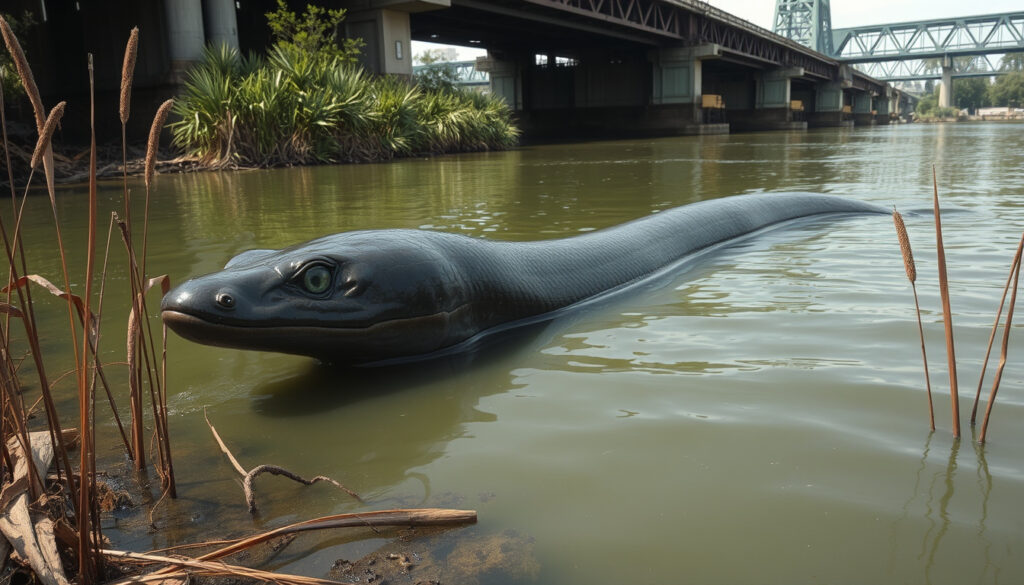
No confirmed species of eel bears a single eye as a normal trait. Cyclopia — the congenital condition of having one eye — occurs across many animals, including fish, but it is a deformity, not a stable characteristic. According to Steemit coverage of cyclopia, the condition appears in about 1 in 16,000 cattle births and is even rarer in fish. Some deep-sea eels have reduced or degenerate eyes, but never a single eye. The phrase “one eyed eel” in sports slang refers to a fan of the Parramatta Eels, not a biological reality.
Do some eels not have eyes?
- Some deep-sea eels have very small, non-functional eyes, but no species is naturally eyeless or one-eyed.
- The myth of a one-eyed eel likely stems from rare cyclopic specimens mistaken for a distinct species.
The widespread belief in one-eyed eels shows how easily a rare anomaly can become legend. Without authoritative resources, social media and folklore fill the gap — often with colourful but inaccurate stories.
Why can’t eel be eaten raw?
Eel blood contains a toxic protein called ichthyotoxin that can cause severe food poisoning and allergic reactions. Cooking or smoking denatures the toxin, making the meat safe. The Irish have eaten eels since Mesolithic times — remains have been found at Mount Sandel in County Derry (Roaringwater Journal). Historically, eels from Lough Neagh were smoked or pickled for preservation (Visit Armagh).
Did the Irish eat eels?
- Yes — archaeological evidence shows eel consumption from the earliest human settlements.
- Modern preparation always involves cooking to at least 60°C.
The trade-off: traditional eel dishes are safe only when properly cooked, but the cultural heritage remains strong, especially in Northern Ireland.
Are eels illegal in Ireland?
Fishing for European eels requires a license from Inland Fisheries Ireland; commercial fishing is restricted due to the species’ critically endangered status. It is not illegal to eat eels, but trade is regulated under EU and national conservation measures. Eels can be caught under permit for scientific or conservation purposes. So while you can’t fish for them freely, you can still buy and enjoy legally sourced eel.
The catch: conservation rules protect the species, but they also create confusion among anglers and consumers about what is and isn’t allowed.
What is the One Eyed Eel fan site?
1eyedeel.com is an independent Parramatta Eels supporters website featuring forums, blogs, a podcast, and active social media accounts on Facebook, Twitter (@1eyedeel), and Spotify. The site covers NRL news, signing rumours, and team discussion. Related searches often include “Parramatta Eels 2026 jersey” and “Eels signing rumours”. It has been active since approximately 2015 and serves as a community hub for fans of the NRL club.
What this means: the term “one eyed eel” has been adopted as a badge of allegiance, transforming a potential biological oddity into a symbol of sports fandom.
Clarity check
Confirmed facts
- European eel is critically endangered and native to Irish waters.
- Conger eel can exceed 3 meters.
- Eel blood is toxic when raw.
- It is illegal to fish for eels without a license in Ireland.
- 1eyedeel.com is an active Parramatta Eels fan site.
What’s unclear
- Existence of a one-eyed eel species – no verified specimens.
- Exact origins of the River Liffey Monster legend.
- When the term “one eyed eel” first referred to the fan site.
Expert perspectives
“Eels are one of nature’s most mysterious fish — they travel thousands of kilometres to spawn and then die. Their lifecycle is still full of questions.”
“The European eel has declined by over 90% in the past 40 years. Urgent action is needed to protect this critically endangered species.”
— Inland Fisheries Ireland, European eel conservation status
“Lough Neagh produces about 10% of the world’s eels, and the industry is a vital part of the local economy.”
— Visit Armagh, The World Beating Eels Of Lough Neagh
“The River Liffey Monster is a giant eel legend that has terrified Dubliners for centuries. Is there any truth to it?”
— Strange & Twisted, River Liffey Monster: The Giant Eel Beneath Dublin
For the curious reader, the story of the one eyed eel is a lesson in how words travel: from holy well legends to rugby fandom, each new layer adds meaning without erasing the old. The biological fact remains — there is no one-eyed eel species — but the term now represents a community as much as a myth. For anyone exploring Irish culture or Parramatta Eels fandom, the phrase carries both a warning and a welcome.
The pattern across biology, folklore, and sports: a rare anomaly becomes a badge of identity, and the line between fact and legend blurs.
Frequently asked questions
Are eels in Ireland only found in rivers?
Eels inhabit rivers, lakes, estuaries, and coastal waters. European eels migrate from the Sargasso Sea to freshwater and return to spawn.
How do eels reproduce?
Eels reproduce by spawning in the Sargasso Sea; larvae drift on currents to freshwater habitats where they grow into adults.
What is the Parramatta Eels team mascot?
The Parramatta Eels mascot is an eel named “Eelsy.”
Can you keep an eel as a pet in Ireland?
Keeping a European eel as a pet is not recommended and may require a license. Wild eels are protected and should not be removed from their habitat.
What does “one eyed eel” mean in rugby slang?
It’s a nickname for Parramatta Eels fans, referencing the team’s mascot and the idea of a fan who is “blind” to other teams.
Is the River Liffey Monster real?
No verified evidence supports the existence of the River Liffey Monster. It is a folklore legend, likely based on large eels or exaggerated sightings.
What is the best bait for catching eels in Lough Neagh?
Traditional baits include worms, fish pieces, and lobworms. However, fishing licenses and regulations apply.
More related posts
 Pat Spencer: From Lacrosse Star to NBA Point Guard
 Ozempic Chemist Warehouse: PBS Price $25 AU
 Ruth Bader Ginsburg: Her Dissents, Quotes, and Legacy
 LG Fridge: Common Problems, Lifespan & Samsung Comparison
 Bret Michaels: Relationship, Health, Bandana & Net Worth (2024)
 Kristen Johnston: Emmy-Winning Actress, Health Journey & Life
 Michaela Conlin: Biography, Age, Height, Ethnicity, Bones Role
 Downton Abbey Characters – Complete Cast and Family Tree Guide