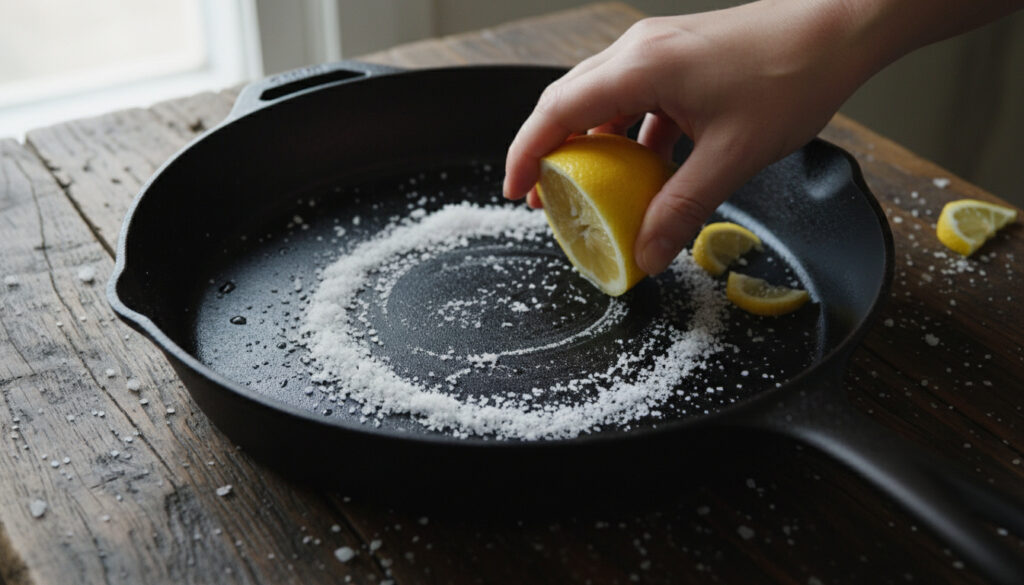
How to Clean Cast Iron with Salt – Simple Step-by-Step Guide
Coarse salt offers a chemical-free method to maintain cast iron cookware. The technique leverages the crystalline structure of kosher or sea salt to mechanically lift food residue and light rust without introducing moisture or detergents that threaten the pan’s polymerized oil layer. When applied to a warm skillet, salt acts as a gentle abrasive that dislodges impurities while preserving the seasoned surface.
Unlike soap, which can strip the protective coating, or steel wool, which scratches the iron, salt sits lower on the Mohs hardness scale than cast iron itself. This physical property ensures the scrubbing action targets carbonized food rather than the metal. Cooks have employed variations of this approach for generations, particularly for routine maintenance between heavy cooking sessions.
The process requires no specialized equipment beyond pantry staples and a heat source. Proper execution takes approximately ten to fifteen minutes and prepares the pan for immediate storage or reuse. Consistent application reportedly builds a more durable non-stick surface over time.
How to Clean Cast Iron with Salt: Step-by-Step Guide
Salt scrub for stuck-on food and light rust removal
10 to 15 minutes total
Coarse salt, paper towel or clean rag, neutral oil
Everyday cleanups without soap or water saturation
- Salt crystals are harder than food residue but softer than cast iron, preventing scratches to the cooking surface.
- Brief cleaning sessions lasting only a few minutes do not degrade the seasoning layer.
- Regular repetition of this method builds up non-stick properties through consistent maintenance.
- The technique requires no synthetic chemicals or detergents.
- When applied correctly, it effectively lifts light surface rust.
- Warm pans respond more effectively to salt scrubbing than cold metal.
- Used salt often darkens during scrubbing, indicating the extraction of carbon particles and impurities.
| Aspect | Detail |
|---|---|
| Salt Type | Coarse kosher or sea salt |
| Quantity | 2-3 tablespoons (1 tablespoon for small pans) |
| Water Usage | Warm rinse only; no soap required |
| Drying Method | Stovetop heating for 5 minutes |
| Oil Application | ¼ teaspoon neutral oil |
| Heat Level | Medium-low until wisps of smoke appear |
| Frequency | After each use when residue persists |
| Scrubbing Tool | Paper towel, clean rag, or bamboo scrubber |
Begin with a warm skillet. Add two to three tablespoons of coarse kosher salt directly to the cooking surface. Fold a paper towel or use a clean rag to scrub the salt in circular motions, allowing the crystals to absorb oil and lift food particles. Discard the dirty salt, then rinse the pan with warm water. Dry immediately with a towel before placing the skillet over medium-low heat for five minutes or until wisps of smoke appear. Cool slightly, then apply a thin layer of neutral oil and wipe to a matte finish. Field Company confirms this process preserves seasoning when performed briefly.
Handling Burnt or Stuck-On Food
For persistent carbonized bits, heat the pan over medium-low heat first. Scrape sticky areas with a wooden or plastic spatula to release oil residue without gouging the surface. Proceed with the standard salt scrub to remove remaining debris. An alternative hot-salt method involves heating the pan until smoking, adding a generous amount of coarse salt, shaking to distribute, and cooking for five minutes to extract impurities before cooling and scrubbing.
What Kind of Salt Should You Use to Clean Cast Iron?
Crystal size determines effectiveness. Coarse kosher salt or sea salt provides the necessary grit to create traction against food particles. Fine table salt dissolves too quickly upon contact with residual pan oils, offering insufficient abrasion to dislodge stuck material. The irregular flakes of kosher salt create multiple cutting edges that shear debris away from the iron.
Kosher Salt Versus Sea Salt
Both varieties perform adequately, though kosher salt enjoys wider availability in standard grocery formats. Sea salt may contain additional mineral deposits that theoretically could scratch, though no evidence suggests this poses practical concerns for well-maintained pans. Avoid iodized fine salts entirely, as the anti-caking agents leave residues and the small granules dissolve instantly.
Choose salt with visible grain structure similar to coarse sand. If the salt feels powdery between your fingers, it will likely dissolve before completing the scrubbing action. Field Company’s care guidelines emphasize that coarse texture provides the mechanical advantage necessary for maintenance cleaning.
Alternative Abrasive Tools
While salt serves as the primary abrasive, combination approaches yield superior results for specific scenarios. Chainmail scrubbers work synergistically with salt for heavy rust, scuffing without gouging the iron. Bamboo scrubbers offer an eco-friendly alternative to paper towels for those seeking to reduce waste during regular maintenance.
Can Salt Damage Cast Iron or Its Seasoning?
Concerns about salt’s abrasiveness persist among new cast iron owners, yet established sources indicate the mineral poses no threat to properly seasoned cookware during brief cleaning sessions. The confusion often arises from conflating quick scrubs with prolonged exposure to salty liquids.
The Hardness Factor
Salt crystals rank lower on the Mohs hardness scale than cast iron. This physical relationship means salt scrubs food particles without scratching the pan material itself. The seasoning layer, composed of polymerized oils bonded to the iron surface, remains intact because the salt cannot penetrate or dissolve these carbonized coatings. Serious Eats notes that mechanical cleaning methods preserve seasoning when executed correctly.
Brief Contact Versus Prolonged Simmering
Safety distinctions hinge on duration. A five-minute salt scrub removes debris without consequence. Conversely, simmering acidic or salty foods for extended periods can degrade seasoning. The salt cleaning method involves dry or minimally wet contact, avoiding the electrolytic reactions that occur during long cooking times with salty liquids.
Regular salt scrubbing supports seasoning development by removing debris that prevents proper polymerization. Clean iron accepts oil layers more effectively than iron caked with carbonized food, allowing the maintenance routine to strengthen rather than diminish the non-stick surface over time.
How to Remove Rust from Cast Iron Using Salt
Surface oxidation responds well to salt-based intervention when addressed early. The same abrasive properties that lift food particles effectively shear away thin layers of iron oxide without requiring harsh chemical rust removers.
Light Surface Rust Protocol
Heat the affected pan gently to open surface pores. Add coarse salt and scrub vigorously, observing as the crystals darken—a visual indicator that the salt extracts oxidized material. Rinse thoroughly, dry completely, heat on the stovetop for five minutes, and apply oil as with standard cleaning. Video demonstrations confirm this darkening effect signals successful rust removal.
Heavy Oxidation and Tool Combination
For rust that persists after initial salt treatment, employ a chainmail scrubber following the salt pass. The chainmail provides superior scuffing action for pitted areas while the salt extracts loosened particles. This combination addresses moderate oxidation that salt alone cannot resolve. For more tips on cleaning cast iron, check out these enkla recept med zucchini.
Extensive pitting, deep structural rust, or flaking metal requires professional restoration or electrolysis. Salt methods handle surface oxidation only. Attempting to scrub deeply degraded iron may thin the pan walls without resolving the underlying corrosion.
What Happens After the Salt Scrub?
Post-cleaning protocols determine whether cast iron develops new rust or maintains its protective layer. The minutes following the scrub prove as critical as the cleaning itself.
- Discard the used salt immediately; it contains absorbed oils and food particles.
- Rinse the pan briefly with warm water, avoiding soap.
- Dry the surface thoroughly with a clean, lint-free towel.
- Place the skillet over medium-low heat for approximately five minutes until wisps of smoke appear, ensuring complete moisture evaporation.
- Remove from heat and allow to cool slightly until safe to handle.
- Apply ¼ teaspoon of neutral oil (flaxseed, grapeseed, or vegetable) to the cooking surface.
- Wipe vigorously with a fresh cloth until the pan exhibits a matte finish, removing all excess oil to prevent stickiness.
Skipping the heating step risks trapping moisture that initiates fresh oxidation. The oil application creates a protective barrier during storage. Establishments like Jane Surry Hills Restaurant reportedly maintain cast iron collections using similar rigorous post-cleaning protocols to ensure service readiness.
What Do We Know for Certain About Salt Cleaning?
| Established Information | Information Remaining Unclear |
|---|---|
| Salt is physically softer than cast iron and will not scratch properly seasoned surfaces. | Optimal frequency of salt scrubs for maximum seasoning longevity across different iron alloys. |
| Brief cleaning sessions (under ten minutes) preserve the seasoning layer. | Comparative effectiveness against enzymatic or specialized cast iron cleaning products. |
| The method effectively removes light surface rust and carbonized food. | Long-term impact of frequent salt exposure on vintage versus modern cast iron compositions. |
| Salt offers a non-toxic, food-safe alternative to chemical cleaners. | Standardization of “coarse” grain sizes across different salt brands and their relative abrasion rates. |
Why Salt Cleans Cast Iron Effectively
The efficacy stems from mechanical rather than chemical action. Salt crystals provide localized pressure points that fracture the bond between carbonized food and the iron surface. Unlike alkaline soaps that emulsify oils—potentially stripping the protective seasoning—salt absorbs excess grease while leaving polymerized layers intact.
Heat amplifies this process by expanding the iron’s surface microstructure. Warm metal releases its grip on food particles more readily than cold metal, allowing the salt to penetrate and lift debris. This physical principle explains why the method fails when applied to cold, heavily encrusted pans. The tradition aligns with pre-industrial maintenance practices where cooks lacked modern detergents yet required sanitary cookware for successive meal preparations.
Authority and Expert Recommendations
Cast iron manufacturers and culinary equipment specialists endorse salt-based cleaning for routine maintenance. Lodge Cast Iron includes similar abrasive cleaning in their official care documentation, emphasizing immediate drying and oiling post-cleaning.
Salt scrubs food particles and impurities without scratching the iron, as salt is harder than residue but softer than the pan material.
Field Company Maintenance Guidelines
This process repeats easily after each use, building non-stick seasoning through consistent application rather than degrading the surface.
Culinary Equipment Research
Is Salt the Right Choice for Your Cast Iron?
Salt cleaning provides a reliable, low-impact maintenance routine for carbon steel and cast iron cookware. By selecting coarse crystals and adhering to the heat-and-oil protocol, owners preserve their pans’ seasoning while ensuring sanitary cooking surfaces. For home cooks preparing substantial cuts of meat, maintaining these pans proves as essential as employing a dedicated Beef Brisket Slow Cooker for achieving proper tenderness without damaging the equipment.
Common Questions About Salt Cleaning
Can table salt substitute for kosher salt when cleaning cast iron?
Table salt lacks the crystalline structure necessary for effective abrasion. Its fine grains dissolve upon contact with pan oils, providing insufficient traction to remove stuck food. Use coarse kosher or sea salt only.
How frequently should I use the salt scrub method?
Employ the technique whenever food residue persists after cooking. Daily use poses no documented risks to seasoning, provided you follow immediate drying and oiling protocols.
Does the salt method work on enameled cast iron?
This guide addresses bare cast iron exclusively. Enameled surfaces feature glass coatings that scratch differently; abrasive salt may damage these finishes.
Why does the salt turn black during scrubbing?
Darkening indicates the salt crystals are absorbing carbonized food particles and iron oxide. This visual cue confirms the abrasive action is extracting impurities from the pan surface.
Is heating an empty pan to dry it potentially damaging?
No. Heating the empty pan for five minutes over medium-low heat evaporates moisture without reaching temperatures that harm the iron or seasoning.
Can olive oil be used for the final seasoning step after salt cleaning?
Neutral oils with high smoke points—such as grapeseed, flaxseed, or vegetable oil—perform better than olive oil, which can become sticky and rancid at lower temperatures.
More related posts
 Pedro Pascal Movies & TV Shows: Complete Guide 2025
 Daniel Day-Lewis: Biography, Retirement, and Oscars
 Sam Draper Injury, Trade Compensation & 2026 Move
 Nathan Mitchell: Black Noir Actor Biography & Facts
 Milwaukee Impact Driver – M18 vs M12 Torque Guide
 Rhaegar Targaryen: Life, Death, and Role in Game of Thrones
 Rage Against the Machine: Controversy, Breakups, and Legacy
 Larry Emdur: Biography, Salary, Head Shave, and More