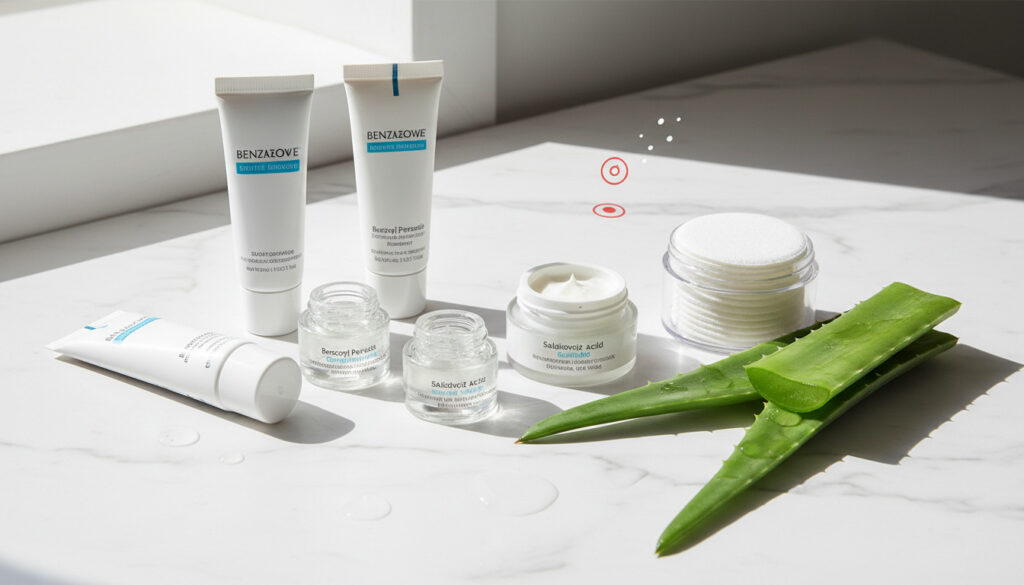
How to Get Rid of Pimples – Fast Effective Treatments
Waking up to a red, swollen blemish creates immediate frustration. Whether preparing for an important event or simply seeking clearer skin, millions search for reliable methods to eliminate pimples quickly without causing further irritation or permanent scarring.
Pimples develop when hair follicles clog with sebum, dead skin cells, and Cutibacterium acnes bacteria, triggering inflammation. Clinical dermatology research confirms that while no treatment completely erases a pimple in eight hours, specific interventions significantly reduce redness and swelling overnight.
This guide examines evidence-based approaches ranging from immediate home remedies to medical interventions, separating proven treatments from persistent myths.
How Can You Get Rid of Pimples Fast?
Fastest Methods
Ice therapy and hydrocolloid patches provide visible reduction within hours by constricting blood vessels and absorbing excess fluid.
Natural Remedies
Tea tree oil and green tea deliver anti-inflammatory compounds that reduce lesion size without prescription costs.
OTC Treatments
Benzoyl peroxide and salicylic acid target bacteria and unclog pores through clinically proven mechanisms.
Prevention Protocol
Non-comedogenic cleansers and stress management interrupt the cycle before breakouts form.
- No remedy eliminates pimples completely overnight; treatments reduce appearance and prevent worsening.
- Tea tree oil demonstrates comparable efficacy to benzoyl peroxide with significantly less skin irritation.
- Hydrocolloid patches physically extract pus and oil while protecting lesions from external bacteria.
- Ice application constricts capillaries, reducing swelling within minutes rather than hours.
- Cystic acne requires medical intervention; topical treatments rarely penetrate deep enough.
- Essential oils require dilution at 1:3 ratios to prevent chemical burns.
- Consistent twice-daily cleansing with acne-specific formulas outperforms sporadic intensive treatments.
| Pimple Type | Underlying Cause | Fastest Fix | Prevention Strategy |
|---|---|---|---|
| Whiteheads | Closed clogged pores trapping oil and dead skin | Hydrocolloid patches or salicylic acid | Non-comedogenic cleansers twice daily |
| Blackheads | Open pores with oxidized sebum and debris | Mild exfoliation with alpha hydroxy acids | Regular oil-control cleansing |
| Papules | Bacterial inflammation without visible pus | Diluted tea tree oil or benzoyl peroxide | Anti-inflammatory topical application |
| Pustules | Inflamed lesions containing white or yellow pus | Spot treatment with benzoyl peroxide | Avoiding pore-clogging cosmetics |
| Cysts | Deep infection with pus, often painful | Dermatologist-prescribed oral medication | Early intervention with OTC retinoids |
| Hormonal Acne | Androgen-driven excess sebum production | Oral contraceptives or anti-androgens | Stress management and dietary adjustments |
How to Get Rid of Pimples Overnight protocols emphasize that immediate ice application provides the fastest visible reduction in swelling for all lesion types.
What Are the Best Natural and Home Remedies for Pimples?
Do Ice Cubes Actually Reduce Swelling?
Cold therapy provides immediate symptomatic relief. Wrapping ice in a thin cloth and applying it for three to four minutes constricts local blood vessels, reducing erythema and edema. Clinical observations suggest repeating this process several times daily prevents inflammation from escalating.
Which Plant-Based Extracts Work?
Green tea contains polyphenols with documented anti-inflammatory properties. Chilling a steeped tea bag and pressing it against the lesion for twenty seconds to five minutes reduces localized inflammation. Alternatively, mixing green tea leaves with aloe vera creates a soothing mask for ten to twenty minutes.
Studies cited in dermatological literature indicate that tea tree oil, when diluted properly, reduces acne lesions comparably to benzoyl peroxide while causing less dryness and peeling. The effective dilution ratio requires one part tea tree oil to three parts carrier oil such as jojoba or sunflower.
Avoid using olive oil or coconut oil as carriers for tea tree oil. These heavy oils clog pores and potentially worsen acne, whereas jojoba oil closely mimics human sebum and demonstrates non-comedogenic properties in controlled studies.
Can Pantry Ingredients Help?
Crushed aspirin mixed with water creates a salicylic acid paste that exfoliates dead skin and reduces oil when applied for ten to fifteen minutes. Honey masks provide antibacterial benefits, while a combination of lemon juice and rose water serves as an astringent. Dermatologists note that jojoba oil combined with clay masks reduced acne lesions by fifty-four percent over six weeks in specific trials.
When Should You See a Doctor for Pimples and What Are Medical Options?
Which Over-the-Counter Ingredients Have Strongest Evidence?
Benzoyl peroxide kills acne-causing bacteria through oxidation, while salicylic acid dissolves the debris clogging pores. Azelaic acid in fifteen to twenty percent gel formulations reduces breakouts gently, making it suitable for sensitive skin types. Hydrocortisone one percent cream reduces redness through anti-inflammatory action.
Deep, painful cysts filled with pus rarely respond to topical treatments and often lead to permanent scarring if untreated. Board-certified dermatologists recommend in-office treatments such as corticosteroid injections or drainage procedures for these lesions.
What Prescription Options Exist?
Persistent or severe acne requires pharmaceutical intervention. Topical or oral retinoids increase cell turnover, while antibiotics reduce bacterial populations. Dapsone gel addresses inflammatory acne specifically. For hormonal acne, oral contraceptives or anti-androgen medications regulate the androgens triggering excess sebum production.
How to Prevent Pimples from Coming Back?
What Daily Habits Interrupt the Acne Cycle?
Cleansing twice daily with gentle, acne-specific formulas removes excess oil without stripping protective barriers. Removing makeup thoroughly before sleep prevents pore blockage. Non-comedogenic moisturizers maintain hydration without adding follicle-clogging ingredients.
Mild exfoliation performed regularly proves more effective than aggressive scrubbing, which spreads bacteria and increases inflammation. Long-term studies suggest zinc supplements and fish oil support skin health, though results require several weeks to manifest.
Do Dietary Choices Influence Breakouts?
Emerging evidence links high dairy consumption to increased acne severity, though mechanisms remain under investigation. Managing stress through exercise and sleep regulation reduces cortisol levels that trigger sebum overproduction.
How Long Does It Take to See Results?
- Immediate (0-2 hours): Ice application reduces swelling and pain through vasoconstriction.
- Overnight (8-12 hours): Hydrocolloid patches absorb surface pus and oil; tea tree oil reduces bacterial load.
- 48-72 hours: Benzoyl peroxide and salicylic acid show visible reduction in inflammation and lesion size.
- One week: Prescription retinoids begin normalizing cell turnover; natural remedies like jojoba oil show cumulative effects.
- Six weeks: Complete skin cell turnover cycle completed; dietary changes and supplements manifest visible improvements.
What Actually Works vs. What Remains Unclear?
Established Interventions
- Tea tree oil efficacy matches benzoyl peroxide with lower irritation rates
- Hydrocolloid patches accelerate healing through physical absorption
- Salicylic acid unclogs pores via keratolytic action
- Benzoyl peroxide eliminates P. acnes bacteria
- Azelaic acid reduces inflammation in sensitive skin
Uncertain or Unproven
- Witch hazel lacks robust clinical research for acne treatment
- Apple cider vinegar claims remain largely anecdotal
- Complete overnight elimination of pimples is impossible; only reduction achievable
- Essential oil safety varies due to lack of FDA regulation
What Causes Pimples in the First Place?
Acne vulgaris originates within the pilosebaceous unit. Excess sebum production combines with accumulated dead skin cells to form a plug within the follicle. Cutibacterium acnes bacteria proliferate within this anaerobic environment, triggering the inflammatory cascade that produces visible redness, swelling, and pain.
Hormonal fluctuations, particularly increases in androgens, stimulate sebaceous gland activity. Research published in dermatology journals identifies genetic predisposition, dairy consumption, and stress-induced cortisol spikes as secondary triggers that exacerbate the primary clogging mechanism.
What Do Leading Dermatologists Say?
“No remedy fully eliminates pimples overnight, but several reduce redness, swelling, and inflammation quickly through targeted anti-inflammatory or antibacterial action.”
— Curology Clinical Review
“Patch testing remains essential; dilute essential oils properly and cleanse gently with non-comedogenic formulas before application.”
— BuzzRx Dermatology Advisory
What’s the Bottom Line on Pimple Treatment?
Effective pimple management requires matching the treatment to the lesion type and severity. Surface whiteheads and blackheads respond to hydrocolloid patches and salicylic acid, while deeper cysts demand professional intervention. 5 Ways to Reduce a Pimple Overnight provides additional specific protocols, but patience remains essential—true clearance requires days to weeks of consistent care rather than miraculous overnight elimination.
Frequently Asked Questions
Can stress cause pimples?
Yes. Stress elevates cortisol levels, which stimulates sebaceous glands to produce excess oil. This creates the clogged follicle environment where P. acnes bacteria thrive, leading to inflammatory breakouts.
How long do pimples typically last?
Untreated pimples generally persist for three to seven days. With proper treatment, inflammation reduces within twenty-four to forty-eight hours, though complete healing requires one to two weeks depending on depth.
Are essential oils safe for all skin types?
No. Sensitive skin requires diluted tea tree oil or avoidance of essential oils entirely. Oily skin tolerates tea tree better, while all skin types require patch testing before full application.
Is it safe to use lemon juice on pimples?
Lemon juice acts as an astringent when mixed with rose water, but its high acidity may irritate sensitive skin. Always patch test first and avoid sun exposure after application due to photosensitivity risks.
Why do some remedies work faster than others?
Treatments addressing inflammation show immediate reduction in redness. Antibacterial agents require twelve to twenty-four hours to reduce bacterial load. No treatment instantly eliminates the physical lesion.
More related posts
 Julie Bishop: Career, Resignation, and Personal Life in 2026
 Roy Orbison: Tragedy, Disability, and Hidden Mysteries
 Tax Rates 2024-25: UK and Ireland Income Tax Guide
 Beats Fit Pro Review: Features, Comparisons & Alternatives
 Minjee Lee: Career, Net Worth, and What Happened in 2025
 Calvary Mater Newca tle: Public Care & Building Concern
 Cobram Estate Olive Oil: Quality, Authenticity & Health Guide
 Milo Ventimiglia: Bell’s Palsy, Ethnicity & Co-Star Bonds