Duck Duck Goose: Rules, Meaning, Benefits, and Origin
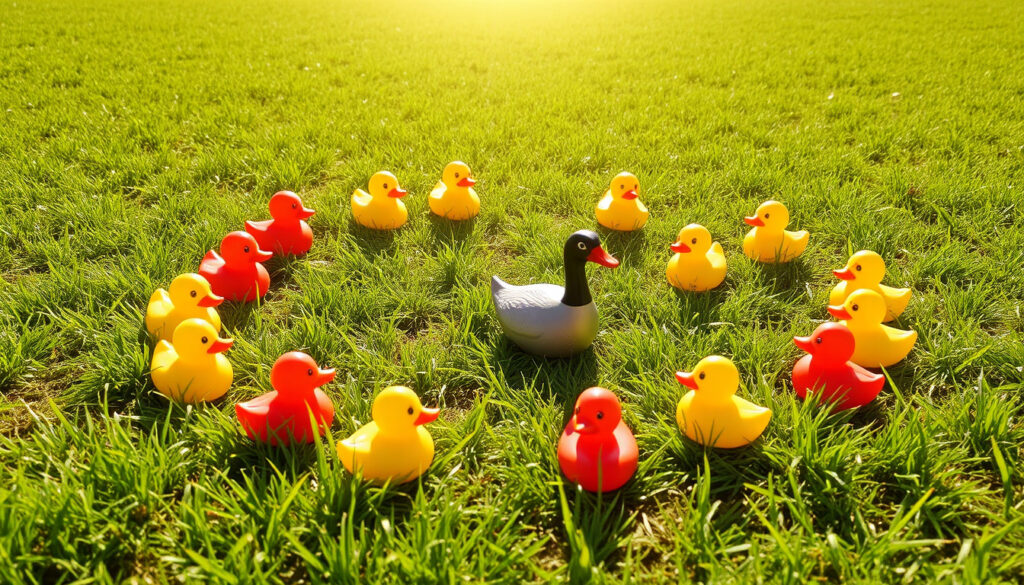
Few preschool games have the staying power of Duck Duck Goose. You probably remember the tension of walking the circle, tapping heads, waiting to shout “Goose!” and then sprinting for the empty spot. But behind that simple chase lies a surprisingly rich set of social‑emotional lessons — and a few regional twists that keep the game fresh.
Age group: Preschool to early elementary (ages 3–7) ·
Minimum players: 4 ·
Typical duration: 5–15 minutes ·
Skills developed: Listening, running, turn‑taking ·
Known variant: Duck Duck Gray Duck (Minnesota)
Quick snapshot
- The game is played with children sitting in a circle; one player taps heads saying “duck” then chooses a “goose” (Scouts (UK youth organisation)).
- The goose chases the tapper around the circle; if caught, the tapper remains the active player (Playworks (US school‑play nonprofit)).
- A minimum of four players is typically required (YMCA of the Triangle (youth development organisation)).
- The exact origin of the game is unknown (Wikipedia (crowd‑sourced encyclopedia)).
- Whether the phrase “duck duck goose” is commonly used as slang outside the game context is not widely documented. (Wikipedia (crowd‑sourced encyclopedia))
- Similar circle‑chase games have been documented for centuries; a likely 19th‑century precursor is the Swedish game “Anka, Anka, Gås” (Wikipedia).
- No single inventor credited – the game evolved organically across cultures. (Wikipedia)
The table below summarises the core details every parent or educator needs.
| Attribute | Value |
|---|---|
| Also known as | Duck Duck Gray Duck (Minnesota) |
| Players | 4 or more |
| Duration | 5–15 minutes |
| Age range | 3–7 years |
| Skills | Listening, running, turn‑taking, patience |
What does it mean when someone says “duck duck goose”?
Does the phrase have a slang meaning?
The phrase directly refers to the children’s game described below. In informal online spaces, “duck duck goose” is sometimes used to describe a situation that feels random or confusing — a kind of “everything happening at once” moment. However, this slang usage is not widely documented in dictionaries or academic corpora; most English speakers still encounter it only as the game name (Wikipedia).
What does the duck emoji 🦆 mean?
The 🦆 emoji is often used playfully in contexts related to the game (e.g., “who’s the goose?”) or as a symbol of evasion — “ducking” out of responsibility. Its meaning is highly contextual and not formally standardised (Emojipedia (emoji reference)).
The emoji may seem trivial, but it highlights how children and parents use game language to reinforce social bonds — a lighthearted shorthand that crosses generations.
How do you play the game Duck Duck Goose?
What are the official rules?
According to the Scouts (UK youth organisation), the core rules are:
- Players sit in a circle facing inward. One player (the “tapper”) walks around the outside.
- The tapper lightly taps each seated player on the head and says “duck” until choosing one player and saying “goose”.
- The chosen “goose” stands up and chases the tapper around the circle.
- If the goose catches the tapper before the tapper sits in the goose’s vacated spot, the tapper remains the active player and the goose returns to the circle (Playworks).
- If the tapper reaches the empty space without being tagged, the goose becomes the new tapper (YMCA of the Triangle).
- Scouts advises that the game continues until all players have had a turn, time runs out, or the group loses interest.
How many players do you need?
A minimum of four players is typically required, though larger groups (up to 20) work well. The YMCA of the Triangle recommends a circle large enough for safe running, with no obstacles inside the ring.
Most rule sources agree on the basic chase, but variations in “what happens after the goose catches the tapper” create very different game dynamics. Playworks says the tapper goes to the middle for one round; Scouts says the tapper stays “it”. Always clarify the rule before you start.
What do children learn from Duck Duck Goose?
Social skills
The game teaches patience (waiting for your name to be called), attention (listening for “duck” vs. “goose”), and the ability to follow instructions. A child who is chosen as “goose” must quickly decide to chase or accept their new role — a small but real lesson in emotional regulation (Playworks).
Physical activity
Running around the circle promotes gross motor skills and cardiovascular exercise. Playworks recommends a light‑touch rule to prevent hard contact that could cause falls.
Turn‑taking
Children learn that everyone will eventually be “it” and that being the goose is part of the fun. Scouts offers an inclusion adaptation: a shy child can nominate someone else to run for them, preserving participation without pressure (Scouts).
For children ages 3–7, the game provides a safe environment to practice impulse control and social risk‑taking — skills that directly transfer to the classroom and playground.
What is the story behind Duck Duck Goose?
Where did the game originate?
The exact origin is unknown, but similar circle‑chase games have existed for centuries. A likely predecessor is the Swedish game “Anka, Anka, Gås”, documented in the 19th century (Wikipedia). The game spread through immigrant communities and oral tradition, with no single inventor credited.
Is there a known creator?
No. The game evolved organically across cultures, much like tag or hide‑and‑seek. The earliest printed references in English appear in early‑20th‑century children’s play manuals.
What is Duck Duck Goose called now?
Is it still called Duck Duck Goose?
Yes, “Duck Duck Goose” remains the standard name across most English‑speaking countries. Major youth organisations (Scouts, Playworks, YMCA) all use this term in their official game libraries.
Are there alternative names?
In Minnesota and parts of the Upper Midwest, the game is widely known as “Duck Duck Gray Duck”. The difference: instead of one “goose”, the tapper says “gray duck” as the chosen word. Local folklore credits this variant to a Norwegian‑influenced pronunciation of “goose” (Wikipedia). No official name change has occurred; both names coexist.
The “Gray Duck” variant is not just a name swap — it often changes the rhythm of the game, because “gray duck” has two syllables, adding a different pacing compared to the single‑syllable “goose”.
How to play Duck Duck Goose: a step‑by‑step guide
Five simple steps to get a group of four or more children playing safely.
- Form the circle. Have all players sit cross‑legged on the floor, facing inward. Leave enough space for running outside the circle.
- Choose the first tapper. Any volunteer works. The tapper stands and walks around the outside.
- Tap and call. As the tapper passes each seated player, they gently tap the player’s head and say “duck”. Repeat for as many players as they like.
- Select the goose. When ready, the tapper taps a player and says “goose!” instead of “duck”. That player immediately stands up and chases the tapper around the circle.
- Chase and swap. The tapper tries to reach and sit in the goose’s vacated spot. If caught, the tapper stays “it” (or sits in the middle for one round, depending on your rule). If the tapper sits safely, the goose becomes the new tapper. Repeat until everyone has had a turn.
For safe play, ensure a clear area, agree on a stop signal, and use a light touch. Scouts recommends that if anyone does not want to be touched, you can wave your hand above the person’s head instead (Scouts).
Confirmed facts vs. what remains unclear
What we know for sure
- The game is played worldwide with consistent core rules.
- It teaches social skills, physical coordination, and turn‑taking.
- A recognised variant exists in Minnesota (“Duck Duck Gray Duck”).
- Inclusive adaptations (no‑touch tapping, runner substitutes) are widely promoted (Scouts, Playworks).
What’s still uncertain
- The exact origin and the first documented instance of the game remain unknown.
- Whether “duck duck goose” has a widely accepted slang meaning outside the game context.
- The precise reason the Minnesota variant prefers “gray duck” over “goose”.
Voices from the field
“If the goose catches the chooser before they reach the open space, the chooser remains the active player and the goose returns to their seat.”
— Scouts (UK youth organisation)
“The fox tries to run around the circle and sit where the goose was sitting. If the fox is tagged, the fox goes into the middle for one round.”
— Playworks (US school‑play nonprofit)
“If ‘it’ reaches the open space without being tagged, the other player becomes ‘it’.”
— YMCA of the Triangle (youth development organisation)
These three sources all describe the same fundamental game, but their variations in “middle‑round” vs. “stay‑it” rules highlight how easily the game adapts to local preferences.
Summary
Duck Duck Goose is not just a nostalgic memory — it’s a living, adaptive tool that helps children practise attention, patience, and physical coordination. For educators and parents, the takeaway is clear: keep the rules simple, prioritise inclusion and safety, and don’t be afraid to swap “goose” for “gray duck” if your local tradition calls for it. The game’s real strength lies in its minimal setup and maximum social yield.
Frequently asked questions
Can Duck Duck Goose be played indoors?
Yes. Use slower movements or walking instead of running. Clear furniture and avoid hard surfaces. A “no‑touch” version (waving instead of tapping) works well for indoor settings (Scouts).
What happens if the goose does not catch the tapper?
The tapper sits in the empty spot, and the goose becomes the new tapper. That’s the most common rule (Playworks).
How many players is ideal for Duck Duck Goose?
6–12 players is a good range — enough for variety but not so many that kids wait too long. A minimum of 4 is needed, and 20+ can still work if the circle is large enough (YMCA of the Triangle).
Is Duck Duck Goose the same as Duck Duck Gray Duck?
In gameplay, yes — the only difference is the called word. The Minnesota variant also sometimes changes the chasing dynamic because “gray duck” has two syllables (Wikipedia).
What are other similar circle games for children?
“Duck, Duck, Splash” (water version from Playworks), “Cat and Mouse”, “Drop the Handkerchief”, and “Musical Chairs” are all close relatives.
Does Duck Duck Goose have any educational value?
Yes. It builds listening skills, turn‑taking, physical coordination, and emotional regulation — all recognised by youth organisations as developmentally appropriate for ages 3–7 (Scouts).
What is the best age to introduce Duck Duck Goose?
Ages 3–4 can start with simplified rules (walking, no chasing). Ages 5–7 can handle the full chase version. Most sources recommend 3–7 as the sweet spot.
More related posts
 Love Me Not – History of the Daisy Petal Ritual
 Martin Brundle: F1 Career, Net Worth, and Lewis Hamilton Feud
 Derryn Hinch: Obituary, Health, and Legacy of the Human Headline
 Toto Wolff Net Worth: How He Built a $1.6 Billion Fortune
 Carrie Preston: Children, Face Scar, and Career Facts
 Foot Massage Machine: Do They Work? Safety & Best Picks
 Dee Williams: Biography, Career, Real Name, Net Worth
 Better Homes and Gardens: Magazine, TV, Recipes & Products