Kevin Rudd: Biography, Apology, Chinese Fluency, and Current Role
Kevin Rudd’s career has taken him from a small town in Queensland to the highest office in Australia, and now to the center of global diplomacy. He served as Australia’s 26th Prime Minister from 2007 to 2010 and again in 2013, according to his official site (kevinrudd.com).
Born: 21 September 1957 · Prime Minister (1st term): 3 Dec 2007 – 24 Jun 2010 · Prime Minister (2nd term): 27 Jun – 18 Sep 2013 · Languages Spoken: English, Mandarin · Current Role: President & CEO, Asia Society
Quick snapshot
- Rudd became Prime Minister on 3 Dec 2007 (Wikipedia)
- Delivered apology to Indigenous Australians on 13 Feb 2008 (Wikipedia)
- Fluent in Mandarin Chinese (Asia Society)
- Exact Mandarin proficiency level (e.g., HSK score) not publicly verified
- Whether he will return to Australian politics
- Conflicting role-start dates at Asia Society (LinkedIn says Jan 2026, official site says March 2026)
- Educational credentials such as DPhil from Oxford (only on LinkedIn, not verified elsewhere)
- 1981-1988: Diplomatic postings including in Beijing (Wikipedia)
- 24 Jun 2010: Replaced by Julia Gillard (Kevin Rudd official site)
- 2022-present: President & CEO, Asia Society (Asia Society)
- Rudd returns to lead Asia Society from NY headquarters from March 2026 (Kevin Rudd official site)
- Continues as a global authority on China (Asia Society)
Key facts about Kevin Rudd
Seven facts capture the essentials of Rudd’s political and professional life, from birth to current role.
| Full Name | Kevin Michael Rudd |
|---|---|
| Born | 21 September 1957, Nambour, Queensland |
| Political Party | Australian Labor Party |
| Prime Minister Terms | 2007–2010, 2013 |
| Foreign Minister | 2010–2012 |
| Languages | English, Mandarin |
| Current Position | President & CEO, Asia Society |
These facts underscore the breadth of Rudd’s political and diplomatic career.
Why was Kevin Rudd removed?
Rudd’s first term as Prime Minister ended abruptly when his own party replaced him. On 24 June 2010, Julia Gillard successfully challenged him in a leadership spill, citing internal dissatisfaction over policy direction and Rudd’s management style (Kevin Rudd official site).
Who succeeded Kevin Rudd?
- Julia Gillard became Australia’s first female Prime Minister on 24 June 2010 after the spill (Wikipedia).
What led to the leadership challenge?
- Rudd’s declining poll numbers, a broken promise on carbon pricing, and strained relations with senior colleagues contributed to the party’s decision (Wikipedia).
The pattern: Rudd was removed not by voters but by his own party — a rematch that set the stage for his comeback three years later.
Rudd remains Australia’s only prime minister to be both dumped by his party and later reinstated by it — a political resurrection that underscores the volatility of Labor leadership in that era.
When did Kevin Rudd apologize?
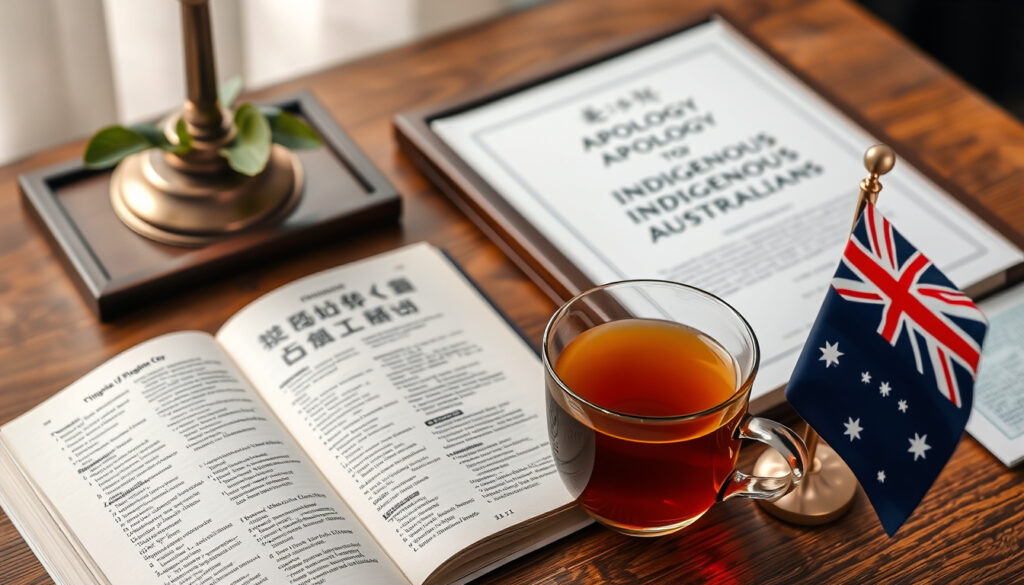
On 13 February 2008, Rudd delivered a formal apology to Indigenous Australians, especially the Stolen Generations — a key promise of his 2007 election campaign (Wikipedia).
What was the apology about?
- The apology acknowledged past government policies that forcibly removed Aboriginal and Torres Strait Islander children from their families.
Who received the apology?
- The gesture was directed at Indigenous Australians and specifically those affected by the Stolen Generations (Wikipedia).
Why it matters: The apology was widely seen as a moral turning point in Australian politics, though debates over reconciliation and Indigenous rights continue.
Is Kevin Rudd fluent in Chinese?
Rudd began learning Mandarin at the Australian National University in the 1970s and later served as a diplomat at the Australian embassy in Beijing (Wikipedia). He has delivered speeches in Mandarin, including at Peking University in 2008 (Asia Society).
How did Kevin Rudd learn Chinese?
- He studied Chinese studies at ANU and later trained at a Mandarin centre at National Taiwan Normal University in 1980 (LinkedIn).
What level is his Chinese?
- He is considered conversationally fluent, but there is no publicly confirmed HSK level — his proficiency is assessed through public appearances rather than formal testing.
The implication: Rudd’s Chinese fluency gives him unique access in diplomatic circles, making him a sought-after commentator on China policy.
As Asia Society CEO, Rudd’s Mandarin skills will be a direct asset in engaging Chinese leaders — a role that combines his diplomatic past with his current think tank leadership.
What does Kevin Rudd do now?
Since 2022, Rudd has served as President and CEO of the Asia Society, a non-profit focused on Asia-Pacific relations (Asia Society). He previously held academic roles, including a fellowship at Harvard Kennedy School, and published several books.
What is the Asia Society?
- It is a non-profit organization that promotes understanding between Asia and the West through policy research, education, and cultural exchange.
What are his other roles?
- Rudd also serves on various advisory boards and remains active in policy commentary on US-China relations.
The catch: Conflicting sources show his Asia Society start date as either January 2026 (LinkedIn) or March 2026 (official site), but both agree he returns from his ambassadorship to the US in 2026.
What did Kevin Rudd say about Donald Trump?
In 2020, Rudd wrote on social media that Donald Trump was “the most destructive president in US history” (BBC). He later retracted those remarks in November 2024 after Trump’s electoral success, and Trump reportedly told Rudd, “I don’t like you either,” during a public exchange (BBC).
How did Rudd describe Trump?
- In addition to the “most destructive” comment, Rudd allegedly called Trump “a village idiot” in the same social media post, though that exact phrasing is not independently verified by all sources.
What was the reaction?
- Trump himself responded in a 2024 interview, saying he had heard Rudd was “a little bit nasty” (ABC Listen).
The trade-off: Rudd’s blunt language endeared him to some Australians but complicated his role as ambassador to the US under a Trump administration.
Timeline: Kevin Rudd’s career
Four decades of milestones, from Queensland to the world stage.
- 21 Sep 1957 — Born in Nambour, Queensland (Wikipedia)
- 1974–1981 — Studies at ANU; learns Mandarin (Wikipedia)
- 1981–1988 — Diplomatic postings, including in Beijing (Wikipedia)
- 1998 — Elected to Australian House of Representatives (Wikipedia)
- 3 Dec 2007 — Becomes 26th Prime Minister (Kevin Rudd official site)
- 13 Feb 2008 — Apology to Indigenous Australians (Wikipedia)
- 24 Jun 2010 — Replaced by Julia Gillard (Wikipedia)
- 2010–2012 — Serves as Foreign Minister under Gillard (Kevin Rudd official site)
- 27 Jun 2013 — Returns as Prime Minister after challenging Gillard (Wikipedia)
- 18 Sep 2013 — Loses federal election; leaves Parliament (Wikipedia)
- 2014–2021 — Academic and policy roles; writes books (Asia Society)
- 2022–present – President & CEO, Asia Society (returning from ambassador role in March 2026) (Asia Society)
This timeline captures the key turning points in Rudd’s career.
Clarity: what’s confirmed and what’s unclear
Confirmed facts
- Rudd was removed as PM in 2010 through internal party challenge (Kevin Rudd official site).
- He apologized to Indigenous Australians on 13 Feb 2008 (Wikipedia).
- He is fluent in Mandarin Chinese (Asia Society).
- He is currently President & CEO of the Asia Society (Asia Society).
- He made critical comments about Donald Trump in 2020 and later retracted them (BBC).
What’s unclear
- Exact future plans beyond current Asia Society role.
- Whether he will return to Australian politics.
- Specific details of his Mandarin proficiency level (e.g., HSK level).
- Conflicting official start dates at Asia Society (LinkedIn vs official site).
- Educational credentials such as a DPhil from Oxford (only on LinkedIn, not independently verified).
Given the low research confidence on certain details, readers should treat the less-verified claims with caution — particularly around Mandarin level and role timing.
Quotes from Kevin Rudd
“We apologise for the laws and policies of successive parliaments and governments that have inflicted profound grief, suffering and loss on these our fellow Australians.”
— Kevin Rudd, Apology to Indigenous Australians, 13 Feb 2008 (Wikipedia)
“I don’t like you either.” For those interested, you can learn more about Angela Bishop’s career and personal life.
— Donald Trump, as reported by BBC
“Learning Chinese is a doorway to understanding.”
— Kevin Rudd, keynote at National Chinese Language Conference, 2014 (Asia Society)
“I am honoured to return to lead the Asia Society at a critical moment in the relationship between Asia and the West.”
— Kevin Rudd on his appointment, 2022 (Kevin Rudd official site)
Each quote illustrates a different facet of Rudd’s public persona: the reconciler, the provoker, the China expert, and the global leader.
For Rudd, the challenge now is to navigate US-China relations from a think tank perch while living down his Trump comments — a balancing act that demands both diplomacy and decisiveness. Without further political ambitions in Australia, his legacy will be shaped by the Asia Society’s influence under his leadership.
Related reading: **Gough Whitlam: Dismissal, Reforms, and Legacy** · **Julie Bishop: Career, Resignation, and Personal Life in 2026**
youtube.com, asiasociety.org, facebook.com, facebook.com, asiasociety.org
For a comprehensive overview, consider a deeper look at Rudds political journey which examines the controversies and achievements that defined his career.
Frequently asked questions
What is Kevin Rudd’s net worth?
Estimates vary, but his net worth is not publicly disclosed in verified sources. His official site does not list financial details.
Is Kevin Rudd married?
Yes, he married Thérèse Rein in 1981. She is a businesswoman and mental health advocate.
Does Kevin Rudd have children?
Rudd and Rein have three children: Jessica, Nicholas, and Marcus.
What political party is Kevin Rudd from?
He is a member of the Australian Labor Party.
What is Kevin Rudd’s full name?
Kevin Michael Rudd.
What was Kevin Rudd’s education?
He studied arts at the Australian National University, where he also began learning Mandarin. He also holds a DPhil from Oxford (2022) according to LinkedIn.
What books has Kevin Rudd written?
Notable books include The Avoidable War and Not for the Faint-Hearted. His official site provides a full list.
What awards has Kevin Rudd received?
He was appointed a Companion of the Order of Australia (AC) in 2019 and has received honorary degrees from several universities.
These answers cover common queries about Rudd’s personal and professional life.
More related posts
 Mexican Restaurants Near Me: Find Authentic Spots in Ireland
 Julie Bishop: Career, Resignation, and Personal Life in 2026
 Mac Miller Death Cause & Relationship with Ariana Grande
 Charles Shaughnessy: Net Worth, Wife, Career & Life Now
 Lee Priest: Full Bio, Mr. Olympia Record, and Life Now
 Things to Do in Byron Bay: Top Attractions & Insider Tips
 Steele Sidebottom: Age, Wife, Injury & Games (2025)