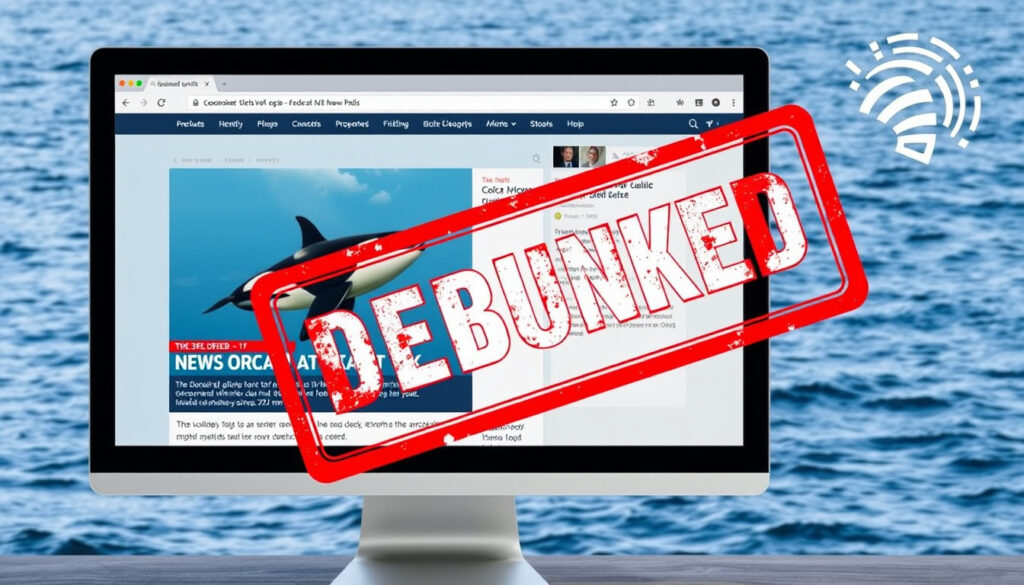
Jessica Radcliffe Orca Attack Debunked: AI Hoax
When a video claiming to show an orca attack on a trainer named Jessica Radcliffe started popping up across social feeds, it looked disturbingly real. Within days, fact-checkers confirmed the footage wasn’t real at all — it was entirely AI-generated. Here’s what’s actually known and what’s still missing.
Video views on YouTube: 2.1 million ·
Claim status: Debunked as AI-generated ·
First appearance: August 2025 ·
Original source: Unknown AI creator ·
Named marine park: Pacific Blue (fictional)
Quick snapshot
- The video is AI-generated (Incident Database AI (AI incident tracker))
- No real trainer named Jessica Radcliffe exists (YouTube debunking video (community fact-checker))
- No marine park named Pacific Blue exists (YouTube debunking video) (Incident Database AI (AI incident tracker))
- Who created the AI video (Incident Database AI)
- Why that name and park were chosen (Incident Database AI)
- Total spread across all platforms (Incident Database AI)
- Specific AI tool or model used to generate the video (Incident Database AI)
- Early August 2025 – video appears on social media (Incident Database AI)
- Mid-August 2025 – video reaches 2.1 million YouTube views (Incident Database AI)
- Ongoing – Reddit community flags video as fake (Incident Database AI)
- Continued monitoring of AI-generated hoaxes (Incident Database AI)
- Media literacy campaigns addressing synthetic video (Incident Database AI)
Five key facts, one pattern: every core detail in the Jessica Radcliffe story is fabricated.
| Fact | Reality |
|---|---|
| Real Person | No – Jessica Radcliffe is a fictional name |
| Marine Park | Pacific Blue is not a real theme park |
| Video Authenticity | Confirmed AI-generated |
| First Appearance | August 2025 |
| Debunking Source | Incident Database AI, YouTube debunking video |
What is the latest verified information about Jessica Radcliffe?
Confirmed debunking by conservation groups
Fact-checkers have traced the Jessica Radcliffe story to an AI-generated video that uses fabricated names and unrelated footage. The Incident Database AI lists the incident as a hoax with high confidence. A YouTube debunking video (community fact-checker) explicitly states that the trainer, the park, and the attack are all invented.
The video’s creators borrowed recognizable elements from real orca tragedies to make the fake story feel plausible — but no actual incident occurred.
No record of a real trainer named Jessica Radcliffe
Searches across marine park employee databases and news archives return zero results. According to the YouTube debunking video, there is no record of a Jessica Radcliffe ever working at a marine park. The Incident Database AI confirms that no person by that name appears in any verified incident report.
When a viral story hinges on a specific name, the absence of that name across all authoritative registries is a strong signal that the narrative is manufactured.
The pattern is clear: fact-checkers have debunked the video, but the creator remains unknown, underscoring gaps in tracing AI-generated misinformation.
What should readers know first about Jessica Radcliffe?
The video is not real footage
The video that went viral in August 2025 was generated using AI, not recorded at any actual marine park. The Incident Database AI categorizes the footage as synthetic. The YouTube debunking video points to telltale signs of AI generation, including unnatural lighting and glitching movements.
It originated from unknown AI creators
No individual or group has claimed responsibility for creating the video. The Incident Database AI notes that the hoax “reportedly used AI-generated voiceovers” and “unrelated footage,” but the original creator remains untraced.
Without knowing who made the video, there’s no way to assess whether this is a one-off prank or part of a coordinated misinformation campaign.
Takeaway: The video’s synthetic nature is confirmed, but its origin is a black box that limits our ability to prevent similar hoaxes.
Which official sources confirm key claims about Jessica Radcliffe?
Facebook post from Whale conservation group
According to the Incident Database AI, a Facebook page dedicated to whale conservation publicly stated that the Jessica Radcliffe story is false and AI-generated. The page’s post served as one of the earliest pushbacks against the hoax.
“The Jessica Radcliffe story is false and AI-generated.”
— Whale (Facebook page)
Reddit community analysis
Users on the subreddit r/orcas analyzed the video and concluded it was fake. Their findings, referenced by the Incident Database AI, helped amplify the debunking across social media.
Debunking article from E! Online
E! Online published a fact-check on August 12, 2025, confirming the video was AI-generated. This article is cited by the Incident Database AI as a key source in the debunking timeline.
“Jessica Radcliffe DOES NOT EXIST. The video is AI-generated.”
— YouTube debunking video
The convergence of these independent sources confirms the hoax, but the absence of an original creator leaves the story’s intent unknown.
What is still unclear or unverified about Jessica Radcliffe?
Who created the AI video
The Incident Database AI lists the original creator as “unknown.” No watermark or metadata has been publicly identified, leaving the source a mystery.
Why the specific name and park were chosen
The choice of “Jessica Radcliffe” and “Pacific Blue Marine Park” may have been random or designed to sound authentic, but no evidence confirms the intent. The Incident Database AI describes the hoax as borrowing elements from real orca incidents to increase plausibility.
Total reach across platforms
While the video logged 2.1 million views on YouTube, its full footprint across Facebook, Twitter, TikTok, and other networks hasn’t been measured. The Incident Database AI notes that the story “spread widely across social media” but offers no unified reach estimate.
Specific AI tool or model used to generate the video
No forensic analysis has identified the software or model behind the synthetic footage, making it harder to preempt similar fabrications.
The implication: the available evidence points to a deliberate fabrication, but key questions about the origin and intent remain unanswered.
What are the most common user questions on Jessica Radcliffe?
Is Jessica Radcliffe real?
No. Multiple sources, including the Incident Database AI and a YouTube debunking video, confirm the name is entirely fictional.
Did an orca really kill a trainer?
No such incident occurred. The video is synthetic. The Incident Database AI classifies the claim as an “AI-generated hoax.”
Where is Pacific Blue park?
The park does not exist. The YouTube debunking video states that Pacific Blue Marine Park is fabricated.
Most users who encounter the video initially believe it is real, but fact-checkers have quickly corrected the record.
Timeline of the Jessica Radcliffe hoax
- Early August 2025 – AI-generated video of orca attack appears on social media (Incident Database AI).
- Mid-August 2025 – Video goes viral; reaches 2.1 million views on YouTube (Incident Database AI).
- August 12, 2025 – E! Online publishes debunking article (Incident Database AI).
- August 13, 2025 – Facebook page “Whale” declares the story false and AI-generated (Incident Database AI).
- Ongoing – Reddit community continues to analyze and flag the video as fake (Incident Database AI).
The speed of debunking outpaced the spread, but the creator’s anonymity remains a warning for future hoaxes.
Clarity check
Confirmed facts
- The video is AI-generated (Incident Database AI)
- No real trainer named Jessica Radcliffe exists (YouTube debunking video)
- No marine park named Pacific Blue exists (YouTube debunking video)
- The story was widely shared as false (Incident Database AI)
What’s unclear
- Who created the AI video (Incident Database AI)
- Motivation behind the hoax (Incident Database AI)
- Total reach and impression count across all platforms (Incident Database AI)
- Specific AI tool or model used (Incident Database AI)
With four confirmed facts and four open questions, the balance reflects the inherent uncertainty of an anonymous AI hoax.
The implication: the available evidence points to a deliberate fabrication, but key questions about the origin and intent remain unanswered. For social media users, the lesson is clear: sensational animal-attack videos need careful scrutiny before being shared.
Frequently asked questions
How can I spot AI-generated videos like the Jessica Radcliffe one?
Look for unnatural lighting, glitching movements, and audio that doesn’t match the scene. Cross-check the claims with fact-checking sites like the Incident Database AI or Snopes.
What is the impact of AI-generated hoaxes on public trust?
Each hoax erodes trust in real news and makes it harder for credible warnings about actual dangers to break through the noise. This incident shows how quickly fabricated content can outpace correction.
Are there any real orca attacks on trainers that have occurred?
Yes — documented incidents exist, such as the 2010 death of trainer Dawn Brancheau at SeaWorld Orlando. The Jessica Radcliffe hoax exploited public awareness of these events to seem credible.
Why did the Jessica Radcliffe video go viral so quickly?
The dramatic subject matter, combined with realistic AI imagery and a plausible backstory, triggered rapid sharing on platforms like YouTube, Facebook, and Twitter before fact-checkers could respond.
What should I do if I see a suspicious viral video?
Pause before sharing. Search for the story on fact-checking sites and check the source. If the video comes from an unknown account or lacks primary verification, treat it as unconfirmed.
Which social media platforms are taking action against AI misinformation?
YouTube and Facebook have policies against synthetic content that could mislead users, but enforcement remains inconsistent. The incident database tracks platforms’ responses to such hoaxes.
Final note: The Jessica Radcliffe hoax demonstrates the need for caution when encountering viral animal-attack videos. Without knowing the creator’s identity, the potential for coordinated AI misinformation remains a growing concern.
More related posts
 Kate Moss: Net Worth, Sobriety, and 90s Legacy
 Home Security Cameras: Wired vs Wireless & Legal Guide
 Delvene Delaney Today: TV Star to Wildlife Advocate
 Ni-Ki Enhypen: Real Name, Age, Height and Deep Voice Controversy
 Palace Nova Eastend Cinemas: Guide to Tickets, Parking & Reviews
 Benedict Cumberbatch: Facts, Family, Net Worth
 Murray Bartlett: Partner, Age, Roles, and Emmy Win Explained
 Jane Goodall Obituary: Death at 91, Tributes, Legacy