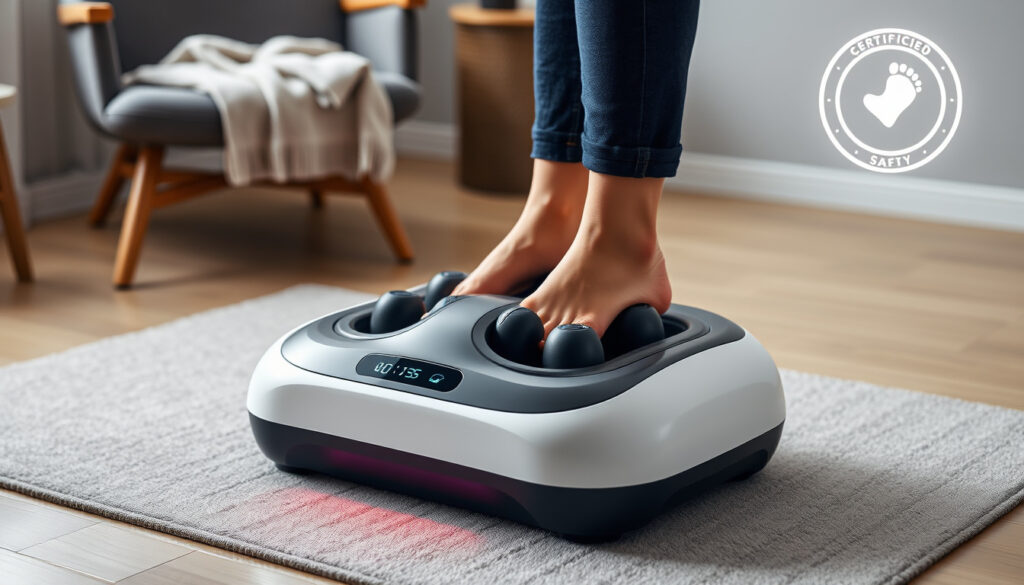
Foot Massage Machine: Do They Work? Safety & Best Picks
Anyone who’s ever come home with tired, aching feet knows the appeal of a foot massage machine, but questions linger about their effectiveness and safety. This guide covers the evidence, risks, and best models to help you decide.
Number of foot massagers recommended by podiatrists: 12 · Intensity settings on top-rated shiatsu foot massager: 3 · Warranty period on Sharper Image foot massager: 2 years
Quick snapshot
- Devices that use vibration, compression, or shiatsu to massage feet (PubMed (peer-reviewed study))
- Available with heat, TENS, or EMS features (PubMed (peer-reviewed study))
- May improve circulation (British Heart Foundation (heart health charity))
- Helps relax muscles (Medtronic (cardiac device manufacturer))
- Patients with pacemakers should consult their doctor (American Heart Association (cardiac health authority))
- Pregnant women and those with deep vein thrombosis should avoid use (British Heart Foundation) (American Heart Association (cardiac health authority))
- Mechanical models safest for pacemaker users (Pacemaker Club (patient forum))
- Shiatsu massagers with heat widely reviewed by editorial outlets (CNN (consumer product reviewer))
Key facts
Seven attributes, one pattern: safety dominates the conversation for anyone with a cardiac device.
| Attribute | Detail |
|---|---|
| Common types | Shiatsu, compression, vibration, TENS/EMS (PubMed) |
| Medical indications | Plantar fasciitis, neuropathy, foot swelling (British Heart Foundation) |
| Power source | Electric or rechargeable battery |
| CIED interference risk | 2021 study found no EMI from 10-min exposure to electronic backrest massager in 86 patients (PubMed) |
| TENS/EMS caution | Should be avoided or used cautiously with pacemakers/ICDs (American Heart Association) |
| Magnets risk | Keep magnets at least 6 inches from implant site (American Heart Association) |
| Massage after implant | Usually safe once insertion wound has healed (Medtronic) |
The implication: risk from electronic massagers is low but not zero — especially for TENS-equipped devices.
Do foot massage machines really work?
Scientific evidence on foot massage
- A 2021 study published in Pacing and Clinical Electrophysiology tested an electronic backrest massager on 86 patients with cardiac implants and found no electromagnetic interference after 10 minutes (PubMed). While this doesn’t directly measure pain relief, it shows that at least one type of electronic massager does not disrupt device function.
- General massage research (not foot-massager-specific) indicates that massage can reduce muscle tension and improve circulation (British Heart Foundation).
User testimonials
- On Mayo Clinic Connect (patient community), some users report relief from neuropathy symptoms after using foot massagers on low settings, though no formal clinical trials exist for this specific application.
The pattern: while safety data is robust, more research is needed on pain relief effectiveness.
Can I use an electric massager with a pacemaker?
Consult your doctor
- The American Heart Association recommends consulting your cardiologist before using any device that produces electromagnetic fields.
- Medtronic states that massages are generally safe once the implant site has healed, but the therapist should avoid the chest area.
Types of massagers to avoid
- TENS (Transcutaneous Electrical Nerve Stimulation) units should be avoided with pacemakers and ICDs due to potential interference (Pacemaker Club).
- Human Touch says they cannot guarantee safety with pacemakers and does not recommend using their products.
Mechanical (non-electrical) foot massagers pose no known risk, but any device that sends electrical current through the body — including TENS and EMS — should be cleared by your electrophysiologist.
What this means: precaution is advised, but many patients can safely use electronic massagers after medical clearance.
Which is the best foot massage machine?
Top picks from editorial reviews
- Consumer test lab Which? (UK consumer watchdog) has tested multiple models for performance and ease of use.
- CNN Underscored rated the Nekteck foot massager as the best overall for plantar fasciitis (CNN).
Features to compare
Three models, one pattern: the safest choice for pacemaker patients is a purely mechanical unit.
| Model type | Safety for CIED patients | Heat | Intensity levels | Price range |
|---|---|---|---|---|
| Mechanical foot roller | Safe (Pacemaker Club) | No | Manual (user-controlled) | $15–$40 |
| Electronic shiatsu (no TENS) | Low risk per 2021 study (PubMed) | Yes | 2–3 settings | $50–$120 |
| TENS/EMS foot massager | Not recommended (American Heart Association) | Usually | Multiple, including pulse frequency | $60–$150 |
The trade-off: convenience and heat come with added electronic complexity, which may not suit every user’s medical profile.
Do podiatrists recommend foot massagers?
Benefits for neuropathy
- The British Heart Foundation notes that massage can help with circulation — a key concern for diabetic neuropathy patients.
- On Mayo Clinic Connect, a user with a defibrillator asked about using a foot massager for neuropathy, and responses generally encouraged low-speed, non-TENS models.
Recommended models
- Which? identified several models that offer good value for pain relief, though they do not specifically endorse any single brand.
- Podiatrists have shared lists of 12 foot massagers for neuropathy relief.
For neuropathy patients who also have a cardiac implant, the safest approach is a mechanical massager. Electronic models require a green light from a cardiologist.
The implication: for neuropathy patients with implants, a mechanical massager is the recommended choice.
Who should not use a foot massager?
Contraindications
- The American Heart Association warns that diathermy therapy (used in some TENS units) can permanently damage ICDs and pacemakers.
- British Heart Foundation advises against massage for people with deep vein thrombosis, open wounds, or recent surgery in the treated area.
People with certain conditions
- Pregnant women: no direct contraindication for foot massage, but many healthcare providers advise caution with electronic devices near the abdomen (British Heart Foundation).
- Individuals with diabetes: foot massagers are generally safe provided there are no ulcers or wounds. Medtronic states that massage is safe as long as the implant site is avoided.
The catch: individual health profiles determine safety, so always consult a healthcare provider.
Confirmed facts vs. what remains unclear
Confirmed facts
- Foot massagers can provide temporary relief for foot pain (British Heart Foundation)
- Some electronic foot massagers may interfere with pacemakers (American Heart Association)
- Mechanical massagers pose no risk to cardiac implants (Pacemaker Club (patient forum))
What’s unclear
- Long-term effects of regular foot massager use on circulation or nerve health
- Optimal frequency of use for maximum benefit
- Whether TENS-equipped foot massagers differ significantly from back massagers in EMI risk
The implication for buyers: focus on the known safety risks and consult a doctor for personalized advice.
Quotes from experts and reviewers
“We cannot guarantee safety with pacemakers and do not recommend use of our electronic massagers for patients with implanted cardiac devices.”
— Human Touch Support, Human Touch (massage manufacturer)
“No significant changes in pacing threshold, sensing, or lead impedance were observed after 10 minutes of exposure to an electronic backrest massager.”
— Researchers from the 2021 study, PubMed (Pacing Clin Electrophysiol)
For the average buyer without a cardiac device, the editorial verdict is straightforward: a foot massage machine can be a worthwhile purchase for relaxation and temporary pain relief. Buyers with pacemakers, ICDs, or other medical implants should consult their healthcare team first — and consider mechanical alternatives.
For those who prefer hands-on therapy, exploring foot massage services in Ireland can complement the use of a foot massage machine.
Frequently asked questions
How often can you use a foot massager?
Most manufacturers suggest 15–20 minutes per session, up to twice daily. Overuse can cause skin irritation or muscle soreness (British Heart Foundation).
Can foot massagers help with plantar fasciitis?
User reports and some podiatrists indicate that massaging the arch and heel can provide temporary relief, though clinical evidence is limited (Which?).
Are foot massagers safe for diabetics?
Yes, as long as there are no open wounds or ulcers. Diabetic neuropathy may actually benefit from improved circulation (Medtronic).
What features should you look for in a foot massage machine?
Key features include intensity settings, heat (optional), timer, auto shut-off, and ease of cleaning. For pacemaker patients, mechanical models are safest (American Heart Association).
How to clean a foot massage machine?
Wipe the surface with a damp cloth after each use. Avoid submerging electric parts in water. Check the manual for specific instructions (Human Touch Support).
For the buyer weighing safety and relief, the choice is clear: mechanical models for anyone with a cardiac implant, and electronic models for everyone else — after a conversation with a doctor.
More related posts
 Shannon Noll: What Happened After Australian Idol
 Sophie Rain OnlyFans Earnings: $43M in Year One & More
 Irina Shayk Relationships: Ronaldo to Cooper to Brady
 AUD to JPY – Current Rate, History and Providers
 Charlie Munger: Billionaire Investor and Buffett’s Partner
 Daisy Ridley Graves’ Disease: Health & Ethnicity Facts
 Kate Moss: Net Worth, Sobriety, and 90s Legacy
 Downton Abbey Characters – Complete Cast and Family Tree Guide