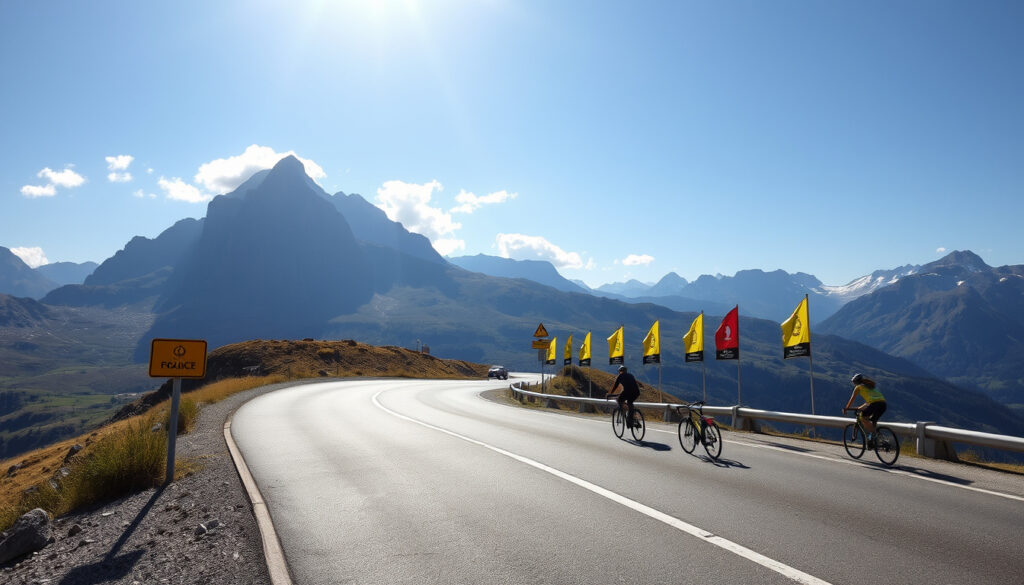
Tour de France 2025 – Route, Stages and Full Results
The 112th edition of the Tour de France delivered three weeks of intense racing across France, combining flat sprints, grueling mountain climbs, and decisive time trials. Tadej Pogačar emerged victorious, securing his place among the sport’s elite with a dominant performance that saw him claim four stage wins including two mountain summit finishes. The race began in Lille on July 5 and concluded on the Champs-Élysées in Paris on July 27, covering approximately 3,320 kilometers of French terrain.
This year’s route challenged riders with a diverse mix of stages, featuring cobbled sections in the north, brutal Pyrenees ascents, and a final week in the Alps that would ultimately decide the general classification. The competition featured established Grand Tour contenders alongside emerging talents, creating compelling narratives throughout the three-week spectacle.
When Does Tour de France 2025 Start and What Are the Key Dates?
Key Race Insights
- Tadej Pogačar claimed the yellow jersey with four stage victories, including mountain wins at Hautacam and Peyragudes
- The race included two individual time trials totaling over 43 kilometers against the clock
- Col de la Loze at 2,304 meters represented the highest point of the race
- Bastille Day (July 14) featured a mountain stage to Mont Dore-Puy de Sancy with 4,400 meters of climbing
- Six different nations were represented among the stage winners
- The total vertical gain exceeded 54,000 meters across all mountain stages
- Two rest days allowed teams to regroup and strategize during the grueling three-week event
Snapshot Facts
| Metric | Value |
|---|---|
| Total Distance | Approximately 3,320 km |
| Mountain Stages | 6-8 (including 5 summit finishes) |
| Time Trials | 2 (33 km flat + 10.9 km mountain ITT) |
| Rest Days | 2 (Toulouse July 15, Montpellier July 21) |
| Vertical Gain | ~54,450 meters |
| Highest Point | Col de la Loze (2,304 m) |
What Is the Full Route and Stage Breakdown for Tour de France 2025?
The 2025 route traced a sweeping arc across France, beginning in the industrial north before swinging westward through Normandy, diving south into the Massif Central, ascending the Pyrenees, climbing Mont Ventoux, conquering the Alps, and finishing with the traditional procession to Paris. This geographical journey tested every dimension of cycling ability, from cobblestone technique in the north to high-altitude endurance in the Alps.
Opening Week: Northern France and Normandy
The Grand Départ in Lille on July 5 launched three days of racing through northern France, incorporating the region’s characteristic cobbles and rolling hills. Stage 1 favored the sprinters, with Jasper Philipsen taking the opening victory. Mathieu van der Poel claimed stage 2 following a hilly parcours, while Tim Merlier won the flat run to Dunkirk. Tadej Pogačar demonstrated his climbing prowess early by winning the hilly stage to Rouen on July 8.
The race then headed west to Normandy, where Remco Evenepoel dominated the 33-kilometer individual time trial around Caen on July 9. This decisive opening time trial set the initial general classification order before the riders faced the longer, hillier stages toward Brittany and the Central Massif.
The opening ten stages covered northern France’s varied terrain, transitioning from flatlands near the coast to the hills of Normandy and Brittany. This opening segment established early breakaway dynamics and allowed sprinters to accumulate points in the green jersey competition.
Middle Week: Pyrenees and Massif Central
The Pyrenees dominated stages 11 through 15, beginning with a flat stage departing and returning to Toulouse. Simon Yates claimed victory on Bastille Day at Mont Dore-Puy de Sancy, a 4,400-meter climb that traditionally delivers dramatic racing. Pogačar then asserted his dominance with consecutive mountain stage wins at Hautacam and the mountain time trial to Peyragudes, where he gained significant time on his rivals.
Thymen Arensman emerged as a strong climbing contender, winning stage 14 to Superbagnères, while Tim Wellens took the hilly stage to Carcassonne. The second rest day in Montpellier provided recovery before the race headed east toward Mont Ventoux and the Alps.
Final Week: Mont Ventoux and the Alps
The decisive final week began with stage 16’s iconic ascent of Mont Ventoux, won by Valentin Paret-Peintre in a memorable display of climbing. Jonathan Milan claimed a flat stage victory before the race entered its most demanding phase in the Alps. Ben O’Connor won the grueling stage to Courchevel, featuring the ascent of Col de la Loze at 2,304 meters, the race’s highest point.
Thymen Arensman secured his second mountain stage victory at La Plagne, while the penultimate hilly stage through the Jura region concluded Alpine racing before the traditional procession to Paris.
The 2025 route featured mountain stages clustered in two main blocks—the Pyrenees (stages 12-14) and the Alps (stages 16-19)—separated by the rest day in Montpellier. This structure allowed for both aggressive racing and tactical recovery between major mountain challenges.
Who Are the Top Favorites and Riders for Tour de France 2025?
Tadej Pogačar entered the 2025 Tour de France as the overwhelming favorite following his dominant performances in the spring Classics and his two previous Tour victories. The Slovenian champion justified this favoritism by winning four stages, including both major mountain summit finishes in the Pyrenees and a decisive mountain time trial.
Jonas Vingegaard, the two-time defending champion, finished second overall, demonstrating his continued ability to compete at the highest level despite Pogačar’s dominance. Florian Lipowitz rounded out the podium in third place, establishing himself among the sport’s elite Grand Tour riders.
Breakthrough Performances
Dutch climber Thymen Arensman emerged as one of the revelations of the race, claiming two mountain stage victories at Superbagnères and La Plagne. His consistent climbing performances positioned him among the sport’s emerging talents. Ben O’Connor also delivered a standout performance, winning the grueling stage to Courchevel and Col de la Loze.
Stage victories were distributed across multiple nationalities: Belgium claimed five wins (Philipsen, Van der Poel, Merlier, Evenepoel, Wellens), Slovenia two (both Pogačar), the Netherlands two (Arensman twice), while Britain, Ireland, Norway, France, Italy, and Australia each secured one victory.
Sprint Contenders
The flat stages showcased the world’s fastest sprinters. Jasper Philipsen, Tim Merlier, and Jonathan Milan each claimed stage victories, demonstrating the depth of talent in the professional peloton’s finishing trains. These riders accumulated points in the points classification while supporting their teams’ general classification ambitions.
Remco Evenepoel’s victory in the Caen time trial highlighted his time trial prowess, though the Belgian rider struggled to maintain his position during the mountain stages that followed.
How Can You Watch Tour de France 2025 and Get Tickets?
The Tour de France attracts extensive broadcasting coverage across multiple platforms, with national and international broadcasters delivering live coverage, daily summaries, and comprehensive analysis throughout the three weeks of racing. Official platforms typically offer additional content including behind-the-scenes footage, rider interviews, and interactive route features.
For those wishing to experience the race firsthand, the official Tour de France website serves as the primary source for ticket information, including access to stage starts, summit finish viewing areas, and VIP hospitality options. Planning ahead is essential, as popular mountain stages and summit finishes sell out quickly.
Planning Your Route Viewing
- Stage starts offer free public access in most locations, allowing spectators to observe the pre-race atmosphere and team presentations
- Mountain summit finishes require tickets for reserved viewing areas, particularly at venues with limited capacity like Peyragudes and Hautacam
- Time trial stages in urban environments typically allow spectators along the course without tickets, though grandstand seating requires purchase
- Rest day venues often open to the public for informal viewing during team car parks and press activities
- Paris final stage on the Champs-Élysées offers excellent public viewing along the circuit
Route maps and detailed stage profiles are available through official cycling news outlets and the Cyclingnews race map, helping spectators plan their viewing locations in advance.
A Chronological Look at the 2025 Race
Understanding the Tour de France requires examining how the race unfolded across its three-week duration, with key moments shaping both individual stage outcomes and the overall general classification battle.
- July 5-7: Grand Départ in Lille with opening flat and hilly stages establishing early race dynamics
- July 8-9: Pogačar wins hilly stage to Rouen; Evenepoel dominates Caen time trial
- July 10-14: Transition stages through Brittany and Central Massif toward Pyrenees
- July 14: Simon Yates wins Bastille Day mountain stage to Mont Dore-Puy de Sancy
- July 15: First rest day in Toulouse
- July 16-18: Pogačar claims Hautacam and mountain time trial to Peyragudes
- July 19: Thymen Arensman wins to Superbagnères
- July 21: Second rest day in Montpellier
- July 22: Paret-Peintre wins Mont Ventoux summit stage
- July 24-25: Alpine stages decide general classification; Pogačar secures yellow jersey
- July 27: Traditional final stage procession to Paris Champs-Élysées
What Is Known and What Remains Unclear About the 2025 Tour
| Established Information | Uncertain or Unavailable |
|---|---|
| Complete stage-by-stage results and winners | Final 2024 winner details prior to 2025 |
| Overall classification podium (Pogačar, Vingegaard, Lipowitz) | Detailed team roster confirmations |
| Exact route with all stage distances | Specific weather conditions during individual stages |
| Mountain stage climbs and summit finishes | Detailed live streaming platform availability by region |
| Two individual time trial stages and distances | Complete stage 21 details for Paris finale |
Historical Context and Significance of the 2025 Edition
The 2025 Tour de France represented the 112th edition of the world’s most prestigious cycling event, continuing a tradition that began in 1903. This year’s route traced familiar geographical patterns, utilizing the Grand Départ format to showcase different regions of France while maintaining the race’s traditional conclusion on the Champs-Élysées in Paris.
Pogačar’s victory reinforced his status as the dominant force in contemporary Grand Tour racing. His four stage wins, including two mountain summit finishes and a mountain time trial, demonstrated the versatility and climbing excellence required to conquer the Tour’s most demanding terrain.
The race’s structure rewarded aggressive racing, with breakaways succeeding on multiple occasions while the general classification battle unfolded among the favorites in the mountains. The two-time trial format provided opportunities for specialists while ensuring the mountain stages remained decisive in determining the final outcome.
Sources and Official Information
Comprehensive results and route details are available through multiple authoritative sources. The Wikipedia summary of the 2025 Tour de France provides detailed stage-by-stage information, while Cyclingstage’s route coverage offers additional perspective on stage profiles and climbing details.
The Freewheeling France stage guide presents comprehensive route information, and the official Tour de France website maintains authoritative coverage of the event, including interactive route maps and official announcements.
“The 2025 route presents a balanced challenge combining the endurance demands of three weeks with the specialized requirements of mountain climbing and time trialing.”
Summary
The 112th Tour de France concluded with Tadej Pogačar’s overall victory, cementing his place among cycling’s elite performers. The 21-stage race covered approximately 3,320 kilometers from Lille to Paris, featuring a diverse mix of terrain that tested every aspect of professional cycling. From the cobbles of northern France to the peaks of the Pyrenees and Alps, riders faced nearly 54,450 meters of vertical gain across mountain stages, two time trials, and numerous opportunities for both sprinters and breakaway specialists. The race showcased emerging talents alongside established champions, delivering compelling competition across all three weeks. For those seeking more comprehensive sports coverage, resources like Most Test Runs – Top Scorers in Cricket History offer additional sporting context.
Frequently Asked Questions
How many stages were there in the 2025 Tour de France?
The 2025 Tour de France featured 21 stages, plus two rest days (July 15 in Toulouse and July 21 in Montpellier) distributed across the three-week race.
Who won the 2025 Tour de France?
Tadej Pogačar of Slovenia won the 2025 Tour de France, finishing ahead of Jonas Vingegaard in second place and Florian Lipowitz in third. Pogačar secured four stage victories during the race.
Where did the 2025 Tour de France start and finish?
The 2025 Tour de France started with the Grand Départ in Lille, France (July 5-7) and concluded on the Champs-Élysées in Paris on July 27, 2025.
What were the major mountain stages in 2025?
Key mountain stages included Mont Dore-Puy de Sancy (stage 10), Hautacam (stage 12), Peyragudes mountain time trial (stage 13), Superbagnères (stage 14), Mont Ventoux (stage 16), Col de la Loze (stage 18), and La Plagne (stage 19).
How long was the 2025 Tour de France?
The 2025 Tour de France covered approximately 3,320 kilometers across 21 stages, with total vertical gain of around 54,450 meters.
Were there time trials in the 2025 Tour de France?
Yes, there were two time trials: a 33-kilometer flat individual time trial around Caen (stage 5) and a 10.9-kilometer mountain individual time trial to Peyragudes (stage 13).
What was the highest point on the 2025 route?
The highest point was Col de la Loze at 2,304 meters above sea level, featured during stage 18 between Vif and Courchevel.
More related posts
 Lily Collins Movies and TV Shows: Complete Guide (2025)
 Lara Raj: Biography, Ethnicity, Religion, and Family Background
 Pepe Le Pew Controversy: Why Was He Removed
 Hannah Ferguson: Sports Illustrated Model & Media Founder
 Jamie Lynn Spears: Family Feud, Daughter’s Health Scare
 Cast of Friends – Actors, Roles, Net Worth and Careers
 Idris Elba Biography: Children, Knighthood, James Bond Refusal
 Minjee Lee: Career, Net Worth, and What Happened in 2025