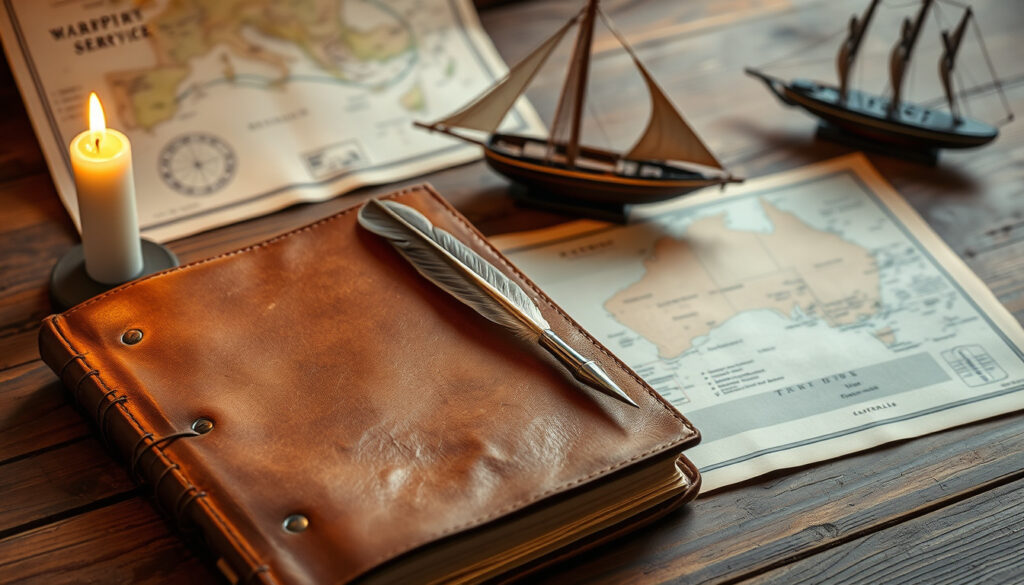
Caroline Chisholm: Biography, Work, and Lasting Legacy
In the early 1840s, the colony of New South Wales was flooded with young, single women arriving from Britain with nowhere to go and no one to meet them—until a determined mother of four decided she’d had enough. Caroline Chisholm, a devout Catholic convert and wife of a British Army officer, turned a small room in her Sydney home into the first shelter for female immigrants.
Born: 1808 (Northampton, England) ·
Died: 1877 (Fulham, London, England) ·
Spouse: Captain Archibald Chisholm ·
Known For: Pioneering immigrant welfare in Australia ·
Faith: Converted to Roman Catholicism at 17 ·
Legacy: Portrait on the Australian $5 note
Quick snapshot
- Born Caroline Jones near Northampton, England, in 1808 and died in London in 1877 (Australian Dictionary of Biography (tier 1 academic source))
- Opened the Female Immigrants’ Home in Sydney in 1841 (National Portrait Gallery (national institution))
- Helped over 11,000 migrants during the 1840s (National Archives of Australia (government archive))
- The exact date of her birth is unrecorded (Australian Dictionary of Biography (tier 1 academic source))
- The precise number of her children varies across historical sources (Wikipedia (general encyclopedia))
- 1808–1877: Lifespan spans the rise of colonial migration from Britain (Catholic Archdiocese of Sydney (religious institution))
- Modern migration welfare continues to cite her model of employment-based settlement (National Archives of Australia (government archive))
The table below anchors seven facts of Caroline Chisholm’s biography to verifiable institutional sources.
| Label | Value |
|---|---|
| Full Name | Caroline Chisholm (née Jones) |
| Born | 1808, Northampton, England |
| Died | 25 March 1877, Fulham, London, England (Catholic Archdiocese of Sydney (religious institution)) |
| Spouse | Captain Archibald Chisholm (Australian Dictionary of Biography (tier 1 academic source)) |
| Religion | Roman Catholic (former Anglican) (Catholic Archdiocese of Sydney (religious institution)) |
| Main Accomplishment | Pioneered female immigrant welfare in Australia |
| Recognition | Portrait on the Australian $5 note (1992–2016) |
Who Was Caroline Chisholm and What Did She Do?
Caroline Chisholm was an English humanitarian who, over several decades, built an immigrant welfare system from scratch in Australia. Born Caroline Jones near Northampton, England, in 1808 (Australian Dictionary of Biography (tier 1 academic source)), she arrived in Sydney in 1838 with her husband and children and was immediately struck by the plight of young, jobless female immigrants sleeping on the streets.
- She founded the Female Immigrants’ Home in 1841 (National Portrait Gallery (national institution))
- She proposed and operated the Stations for Immigrants—a network of rural employment depots (Australian Dictionary of Biography (tier 1 academic source))
- She helped over 11,000 migrants find homes and jobs during the 1840s (National Archives of Australia (government archive))
When was Caroline Chisholm born?
Caroline Chisholm was born Caroline Jones in or near Northampton, England, in 1808. The Catholic Archdiocese of Sydney gives the exact date as 30 May 1808 (Catholic Archdiocese of Sydney (religious institution)). The day itself is not recorded in all sources because registration of births was still voluntary in England at the time.
The implication: Chisholm’s biographical details rely on church and later institutional records, which is why even her birth date appears with slight variation across authoritative sources.
What Was Caroline Chisholm’s Early Life and Family?
Chisholm’s personal story is one of quiet rebellion. She was raised Anglican but at age 17 converted to Roman Catholicism—a move her father reportedly opposed so strongly that he disinherited her.
- She married Captain Archibald Chisholm, a British Army officer, in 1830 (Australian Dictionary of Biography (tier 1 academic source))
- She had several children, though the exact number varies across sources (Wikipedia (general encyclopedia))
The pattern: Chisholm’s family life was both her anchor and her springboard. Her husband supported her work wholeheartedly—collecting immigrant statements with her across the New South Wales countryside—while her children accompanied her during periods of intense public advocacy.
Did Caroline Chisholm get married?
Yes. She married Lieutenant (later Captain) Archibald Chisholm in 1830 (Australian Dictionary of Biography (tier 1 academic source)). The marriage was a partnership of equals in practical terms: Archibald helped gather the more than 600 sworn statements from immigrants that Caroline used to lobby the British and colonial governments (Australian Dictionary of Biography (tier 1 academic source)). He was still in uniform and the family moved between military postings in India and Australia.
Did Caroline Chisholm have children?
Yes. She had several, though records are inconsistent on the exact number. The Australian Dictionary of Biography notes her children accompanied her on the 1846 trip to England (Australian Dictionary of Biography (tier 1 academic source)). Counting children from second-hand accounts produces numbers ranging from four to eight.
Historians working with 19th-century colonial records face a fundamental constraint: family registers were not always kept. Chisholm’s own children appear in the margins of her reports rather than in any central register.
Was Caroline Chisholm Catholic?
Yes—and that fact shaped everything she built. Caroline Chisholm was born into an Anglican family but converted to Roman Catholicism in 1817, when she was 17 years old (Catholic Archdiocese of Sydney (religious institution)).
- Her father disinherited her after the conversion (Australian Dictionary of Biography (tier 1 academic source))
- She supported Catholic immigrants in Australia through her shelters and employment networks (Catholic Archdiocese of Sydney (religious institution))
- Her faith was a key driver of her social justice work, as the Australian Cardijn Institute describes her as a lay apostolate figure (Australian Cardijn Institute (theological research body))
Was Caroline Chisholm born Catholic?
No. She was raised in the Church of England and converted to Catholicism at 17 (Catholic Archdiocese of Sydney (religious institution)).
How did her faith influence her work?
Directly. Chisholm described her mission to the Female Immigrants’ Home as grounded in the Catholic teaching of practical charity. The Sisters of Charity Australia Heritage Centre notes that her Home operated out of the old printing office and immigration barracks behind First Government House, and that it closed in May 1842 after assisting thousands of women (Sisters of Charity Australia Heritage Centre (religious heritage institution)).
The pattern: Chisholm’s Catholic identity ran counter to the Anglican establishment of colonial Sydney. She built bridges across denominations by focusing on the practical outcome—employment and shelter—rather than theological debate.
What Did Caroline Chisholm Do in India?
Less than her Australian work, but it mattered. In 1854, after her initial lobbying campaigns in England, Chisholm travelled to Madras (now Chennai) where her husband was stationed. There, she opened the Female School of Industry, a vocational training institution for the daughters of British soldiers (Australian Cardijn Institute (theological research body)).
- She lived in Madras to support her husband’s military career (Australian Dictionary of Biography (tier 1 academic source))
- She established the Female School of Industry for soldiers’ daughters (Australian Cardijn Institute (theological research body))
- Her work in India was less prominent than her Australian career but showed the same model: self-funded, employment-focused welfare (Australian Dictionary of Biography (tier 1 academic source))
What was the Female School of Industry?
The Female School of Industry in Madras taught girls reading, writing, arithmetic, and practical housekeeping skills so they could find work or marry respectably. It operated on the same principle as the Female Immigrants’ Home: no charity, just placement into employment.
Why this matters: India was not a detour for Chisholm—it was a test case. She proved her system could be exported, and the lessons she learned there about family-based migration shaped the Family Colonisation Loan Society she founded in 1849 (National Archives of Australia (government archive)).
What Happened to Caroline Chisholm and What Is Her Legacy?
Caroline Chisholm died on 25 March 1877 in Fulham, London, at the age of 69 (Catholic Archdiocese of Sydney (religious institution)). She had returned permanently to England in 1866 and lived in relative obscurity, though her legacy had already been cemented in Australia.
- She died in Fulham, London, England (Catholic Archdiocese of Sydney (religious institution))
- Her portrait was placed on the Australian $5 note, circulating from 1992 until 2016 (Wikipedia (general encyclopedia))
- Chisholm TAFE and numerous schools are named after her (Wikipedia (general encyclopedia))
For modern policymakers and migration advocates, Chisholm’s core insight is direct: when immigrants are treated as economic agents rather than welfare recipients, settlement outcomes improve. The National Archives of Australia’s learning resource explicitly frames her approach as a “drawing of humanitarianism into economic migration” (National Archives of Australia (government archive)).
Where did Caroline Chisholm die?
She died in Fulham, London, England, on 25 March 1877 (Catholic Archdiocese of Sydney (religious institution)).
Why is Caroline Chisholm on the $5 note?
She was commemorated on the Australian $5 note from 1992 to 2016 as a recognition of her contributions to nation-building—the only woman other than Queen Elizabeth II to appear on a standard Australian banknote at that time.
Timeline
Ten key events that trace Chisholm’s life from a Northampton village to the Australian $5 note.
| Date / Period | Event |
|---|---|
| 1808 | Caroline Jones is born near Northampton, England (Australian Dictionary of Biography (tier 1 academic source)) |
| 1817 | Converts to Roman Catholicism (Catholic Archdiocese of Sydney (religious institution)) |
| 1830 | Marries Lieutenant Archibald Chisholm (Australian Dictionary of Biography (tier 1 academic source)) |
| 1838 | Arrives in the colony of New South Wales (Australian Cardijn Institute (theological research body)) |
| 1841 | Opens the Female Immigrants’ Home in Sydney (Sisters of Charity Australia Heritage Centre (religious heritage institution)) |
| 1846 | Returns to England to advocate for emigration reforms (Australian Dictionary of Biography (tier 1 academic source)) |
| 1849 | Founds the Family Colonisation Loan Society (National Archives of Australia (government archive)) |
| 1854 | Travels to India, establishes the Female School of Industry in Madras (Australian Cardijn Institute (theological research body)) |
| 1877 | Dies in Fulham, London, at the age of 69 (Catholic Archdiocese of Sydney (religious institution)) |
| 1992 | Honoured with a portrait on the Australian $5 note (Wikipedia (general encyclopedia)) |
Confirmed facts
- Born 1808 in Northampton, England
- Converted to Catholicism at age 17
- Founded the Female Immigrants’ Home in Sydney in 1841
- Died in Fulham, London, in 1877
- Portrait on the Australian $5 note (1992–2016)
What’s unclear
- Exact date of birth is unrecorded (Australian Dictionary of Biography (tier 1 academic source))
- Precise number of children varies across sources (Wikipedia (general encyclopedia))
- Total financial impact of the Stations for Immigrants is difficult to quantify
She was described by contemporaries as ‘the indispensable woman of the time’ for her concern for homeless girls and poor families.
Catholic Archdiocese of Sydney (religious institution)
Chisholm spent almost two decades working to improve conditions for immigrants to Australia.
For Australian migration historians and modern policymakers, Caroline Chisholm’s model still carries weight: employment-based settlement funded by the migrants themselves, not the public purse. Her lesson is not nostalgia—it’s a working prototype. The choice for today’s reformers is simple: build infrastructure around immigrant employment, or leave the worst off to fend for themselves as they did in 1838.
chisholm.wa.edu.au, encyclopedia.com, encyclopedia.com, christianhistoryinstitute.org, britannica.com
Frequently asked questions
What was the Female Immigrants’ Home?
The Female Immigrants’ Home was opened by Caroline Chisholm in November 1841 in the old printing office and immigration barracks behind First Government House in Sydney. It housed nearly 100 women at a time and operated until May 1842, after assisting thousands of single female immigrants (Sisters of Charity Australia Heritage Centre (religious heritage institution)).
Was Caroline Chisholm involved in government policy?
Yes. She successfully lobbied Governor Gipps to provide the building for the Female Immigrants’ Home (National Archives of Australia (government archive)). Later, she appeared before British parliamentary select committees to argue for assisted migration reforms.
What challenges did Caroline Chisholm face as a woman in the 19th century?
She faced constant financial resistance—colonial authorities initially denied her government assistance, and her father had disinherited her. She also operated in a male-dominated political sphere where women rarely addressed Parliament or influenced policy. Her workaround was data: she and her husband collected more than 600 sworn immigrant statements to make her case impossible to ignore (Australian Dictionary of Biography (tier 1 academic source)).
Is Chisholm TAFE named after Caroline Chisholm?
Yes. Chisholm Institute (formerly Chisholm TAFE) in Victoria is named in her honour. Multiple primary schools across Australia also bear her name.
Did Caroline Chisholm write any books or reports?
Yes. She wrote several pamphlets and reports, including “Emigration and Transportation Relatively Considered” (1847) and annual reports on the Female Immigrants’ Home. These documents were part of her lobbying arsenal—hard data presented to Parliament.
What is the Caroline Chisholm Society?
The Caroline Chisholm Society is a modern charitable organization in Australia that supports mothers and children in need, continuing her legacy of maternal and child welfare.
Related reading
- Sarina Russo AM: Biography, Awards & Personal Life – A modern Australian employment services pioneer whose work helping migrants find jobs parallels Chisholm’s 19th-century model.
- Gough Whitlam: Dismissal, Reforms, and Legacy – The Whitlam government introduced landmark multicultural and immigration reforms that expanded on Chisholm’s foundation.
More related posts
 Pepe Le Pew Controversy: Why Was He Removed
 Harry Potter Costume – Best Buys, DIY Ideas and Group Tips
 Qudos Bank Arena Seating – Chart, Best Seats and Views
 Lucy Chen: The Rookie Guide – Actress, Background, Storylines
 Priscilla Hon: tennis ranking, coach, and career facts
 Marc Marquez Net Worth & Salary: Active MotoGP Top Earner
 Cronulla Surf Cam: Live Views, Surf Conditions & Best Times
 Duck Duck Goose: Rules, Meaning, Benefits, and Origin