James Webb Telescope Images: Latest NASA Galleries & Downloads
The James Webb Space Telescope has returned over 4,380 photos since its first science images dropped in July 2022—and the stream shows no signs of slowing. From galaxies that shouldn’t exist to newborn stars caught mid-formation, Webb keeps reshaping what we thought we knew about the cosmos. This guide walks you through where to find the latest official NASA images, how to download 4K versions, and what makes each release worth bookmarking.
First public image released: July 11, 2022 · Primary image source: NASA science.nasa.gov · Total Flickr photos: 4,380 · Key observation targets: Galaxies, stars, planets · Gallery update frequency: Reverse chronological
Quick snapshot
- First image date: July 2022 (NASA Science)
- NASA gallery updates with newest releases first (NASA Science)
- SMACS 0723 image reveals thousands of galaxies (NASA Science)
- Exact pixel dimensions for latest 2026 gallery releases
- Official file size and format specs for 4K downloads
- Full catalog of all 2026 image releases
- July 2022: First images released including SMACS 0723 deep field (NASA Science)
- 2024: Saturn captured in new JWST imagery (NASA Science)
- 2026: Most recent Webb images now available in gallery (NASA Science)
- Ongoing galaxy, star, and planet image releases through 2026
- Expanded Solar System coverage including more exoplanet atmospheres
- Deeper infrared views into early universe structure formation
| Label | Value |
|---|---|
| Launch date | December 25, 2021 |
| First image date | July 11, 2022 |
| Lead agency | NASA |
| Key partners | ESA, CSA |
| Image resolution availability | Up to 4K |
What did the James Webb Telescope find recently?
NASA’s Webb Image Galleries display the most recent releases in reverse chronological order, making it easy to find what’s new without digging through archives. Recent highlights include “Webb Reveals Complex Galactic Structures” and “Spying a spiral through a cosmic lens” from ESA’s collaboration portal (ESA/Webb). These images represent Webb’s continued focus on understanding galaxy evolution through infrared observations that penetrate cosmic dust clouds previously opaque to Hubble.
Recent galaxy images
The ESA/Webb gallery features some of the most detailed galaxy visuals ever captured. The Phantom Galaxy (M74) received particular attention, showcasing Webb’s ability to reveal spiral arm structure with unprecedented clarity. NASA’s main gallery also curates a composite Jupiter image demonstrating the telescope’s Solar System capabilities, with NIRCam capturing auroras and hazes in the gas giant’s atmosphere (NASA Gallery). These recent releases span the full range of Webb’s observation targets—from distant galaxies to nearby planets.
Latest planetary observations
Webb’s planetary work extends beyond Jupiter. A mini poster of Saturn captured in 2024 is available for free download and print from NASA’s outreach materials section (NASA Science). The 2024 Saturn image joins a growing collection of Solar System portraits, each showcasing Webb’s ability to resolve atmospheric features in methane-rich atmospheres that challenge even ground-based observatories.
What did the James Webb Telescope discover that shouldn’t exist?
Among Webb’s most provocative findings are galaxies in the early universe that challenge standard cosmological models. These structures appeared larger and more mature than theoretical models predicted for their distance (and therefore age). While not literally “impossible,” these anomalous galaxies force astronomers to reconsider formation timelines for galactic structure.
Anomalous galaxies
The discovery of massive galaxies existing within the first billion years after the Big Bang prompted reexamination of early universe formation models. These objects, observed in Webb’s deep field images, contain the faintest infrared signals ever detected from such early cosmic structures (NASA Science). The tension between observation and prediction highlights Webb’s ability to reveal what previous telescopes couldn’t see.
Threatening cosmic structures
Webb has also captured structures with ominous-sounding names—like the Cosmic Tornado or the Zombie Galaxy—that reflect unusual morphology rather than literal danger. These objects undergo dramatic interactions that Webb’s infrared sensors track through obscuring dust. Each discovery adds to the catalog of cosmic evolution pathways that weren’t visible before Webb’s deployment.
Have we ever seen a star being born?
Webb’s infrared capabilities have made star formation observation one of its signature achievements. Unlike visible light, which scatters off surrounding dust, Webb’s infrared sensors peer through obscuring clouds to capture protostellar disks in their earliest stages. This isn’t just theoretical—Webb has directly imaged structures consistent with active accretion, the process by which stars gather mass.
Star formation visuals
The Pillars of Creation received a dramatic new portrait from Webb, revealing embedded protostars that Hubble’s visible-light view couldn’t penetrate. These newborn stars appear as bright red dots within dusty columns, each one actively pulling in material from its surrounding disk. The image demonstrates Webb’s unique ability to observe stellar nurseries in real-time (NASA Science).
Webb-captured birth events
JWST images captured in infrared reveal previously invisible star birth areas by detecting heat signatures through cosmic dust. This capability lets astronomers study the earliest stages of stellar evolution—disk formation, bipolar outflows, and the first million years of a star’s life—that previous telescopes could only model theoretically (NASA Science). The Planetary Society notes that these images help scientists look back through time at early universe star formation conditions (The Planetary Society).
What were the biggest findings from the James Webb Telescope?
The July 11, 2022 release remains Webb’s most iconic moment—the day the first full-color science images premiered before a global audience. Among them, the deep field of galaxy cluster SMACS 0723 revealed thousands of galaxies in what NASA described as approximately the size of a grain of sand held at arm’s length (NASA Science). That single image contained more galaxies than the entire Hubble Ultra Deep Field, yet covered a fraction of the sky.
Iconic early universe images
Webb’s largest image to date is an enormous mosaic covering about one-fifth of the Moon’s diameter, with over 150 million pixels assembled from nearly 1,000 image files (NASA Science). Stephan’s Quintet—a visual grouping of five galaxies featured in the film “It’s a Wonderful Life”—provided Webb’s sharpest view of galactic interaction, resolving individual stars within these merged systems for the first time.
Exoplanet and solar system shots
Webb’s exoplanet work includes atmospheric spectroscopy of gas giants and super-Earths, detecting water vapor, carbon dioxide, and methane signatures that ground-based telescopes miss. Combined with Solar System shots like the Jupiter composite and Saturn portrait, these observations demonstrate Webb’s versatility across distance scales (NASA Gallery). The telescope’s NIRCam instrument captured Jupiter’s auroras and hazes in a composite image that redefined our view of the giant planet.
What unsettling things has Webb revealed?
Some Webb images carry nicknames that sound more science fiction than science fact—”Cosmic Claw,” “Cosmic Tornado,” “Ghost Galaxy”—earned from their distinctive shapes. These aren’t official designations but reflect the dramatic, sometimes unsettling morphologies that Webb’s infrared eyes reveal. The visceral quality of these images adds to their public appeal while serving real scientific purposes.
Terrifying Neptune features
Webb’s 2022 image of Neptune, the ice giant often called the most distant planet, revealed features that surprised even experts. The image captured Neptune’s rings with unprecedented clarity and showed storm systems and atmospheric bands that Hubble’s visible-light view only partially resolved. Methane absorption in Neptune’s atmosphere makes it appear blue in visible light, but Webb’s infrared reveals underlying structure that changes the planetary science conversation.
Cosmic horrors
Webb’s deep field images show galaxies in collision, zombie galaxies absorbing their neighbors, and structures that look like cosmic debris fields. These aren’t horror movies—they’re normal stages in galactic evolution that Webb’s sensitivity reveals in uncomfortable detail. The term “unsettling” reflects the gap between expectation and observation: space is messier and more dynamic than pre-Webb models suggested.
Webb’s most “unsettling” discoveries aren’t dangerous—they’re model-breaking. Scientists face a good problem: too much high-quality data that doesn’t fit existing theories.
Image Release Timeline
| Date/Period | Event |
|---|---|
| July 11, 2022 | First image released to public |
| 2022–2023 | Early universe deep fields, galaxy clusters, and Stephan’s Quintet published |
| 2024 | Saturn captured by JWST; outreach poster released |
| 2023–2026 | Ongoing image releases of galaxies, stars, and planets |
| Recent | Star birth capture and anomalous galaxy discovery |
Confirmed facts
- First image release: July 2022 from NASA
- NASA gallery updates in reverse chronological order
- Flickr archive contains 4,380 photos
- 4K resolution downloads available from NASA detail pages
- Saturn image captured and released in 2024
- SMACS 0723 deep field shows thousands of galaxies
What’s still unclear
- Exact pixel dimensions for each 2026 gallery image
- Complete catalog listing for all 2026 releases
- Precise file size and download format options
- Life probability estimates for specific exoplanets
- Remaining operational lifespan implications for Sun observation
What experts say
This slice of the vast universe is approximately the size of a grain of sand held at arm’s length by someone on the ground.
— NASA (official statement on Webb’s First Deep Field)
NASA’s James Webb Space Telescope has delivered the deepest and sharpest infrared image of the distant universe so far.
— NASA (official statement on first science images)
This enormous mosaic is Webb’s largest image to date, covering about one-fifth of the Moon’s diameter.
— NASA Science (on Webb’s mosaic construction)
The implication: Webb has delivered over four years of continuous cosmic imagery, yet the most significant discoveries may still lie ahead. For anyone interested in space imagery—whether for scientific reference, educational projects, or desktop wallpaper—the official NASA and ESA galleries remain the most reliable sources. Third-party wallpaper sites serve a purpose for aesthetic downloads, but they lack the metadata and context that make NASA releases scientifically valuable. The choice between quick aesthetic gratification and properly attributed, scientifically contextualized imagery is one that educators, researchers, and serious space enthusiasts will make without hesitation.
Related reading: How to Take a Screenshot – Windows Mac iPhone Android Guide · How to Scan on iPhone – Documents and QR Codes Guide
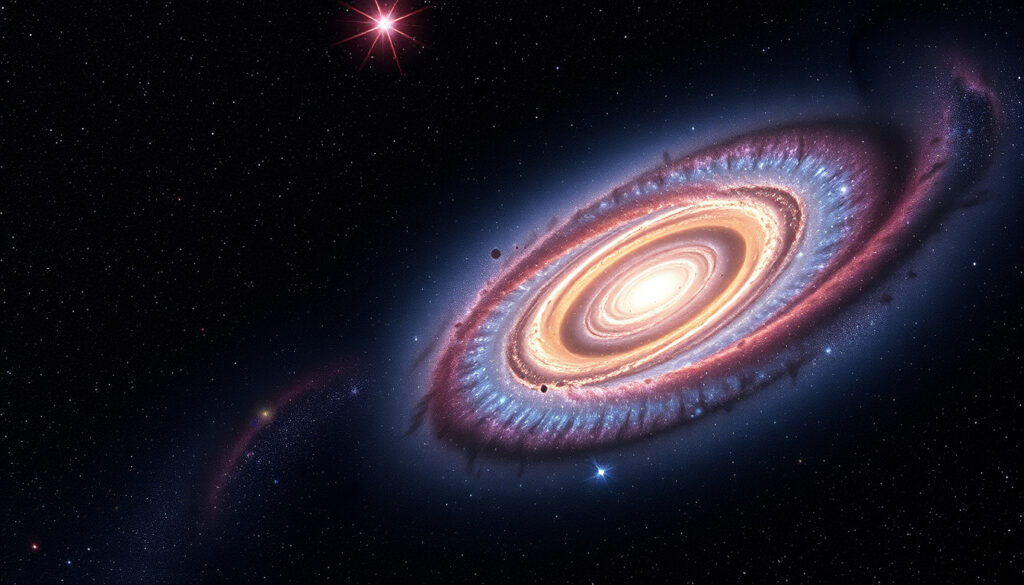
NASA’s James Webb Telescope galleries reveal cosmic wonders, much like the featured JWST image collection highlighting top infrared shots of galaxies and nebulae available for download.
Frequently asked questions
Where can I download James Webb Telescope images?
The official NASA Science Webb Image Galleries page (science.nasa.gov) offers the most reliable downloads. Navigate to the multimedia images section, select your target image, and click the downward arrow in the lower right corner to save high-resolution versions.
What are the latest James Webb Telescope images?
NASA displays Webb’s most recent images in reverse chronological order on their gallery page. Recent additions include galactic structure releases from ESA’s collaboration portal and Solar System portraits like the 2024 Saturn image.
How to get James Webb Telescope images in 4K?
High-resolution 4K downloads are available directly from NASA detail pages. The “Webb products” filter on NASA’s gallery page also offers downloadable outreach posters optimized for print and digital display.
What do James Webb Telescope images of black holes reveal?
Webb’s infrared capabilities reveal structures surrounding black holes—including accretion disks and relativistic jets—that visible-light telescopes cannot penetrate. These images show cosmic lens effects and the impact of black hole gravity on nearby stellar populations.
Are James Webb Telescope images available as wallpapers?
Yes, both officially and through third-party sites. Alpha Coders offers 23+ JWST 4K wallpapers in 3840×2160 resolution and above, while Wallpaper Cave provides additional options. For scientific context, NASA’s official posters serve better than purely aesthetic wallpaper downloads.
What planets appear in James Webb Telescope images?
Webb has captured Jupiter (showing auroras and hazes via NIRCam), Saturn, and Neptune from our Solar System, plus atmospheric spectra from multiple exoplanets including gas giants and super-Earth candidates.
How often are new James Webb Telescope images released?
NASA releases new Webb images on an ongoing basis, with the gallery updated in reverse chronological order. Major science releases coincide with peer-reviewed publications, typically several times per month.
More related posts
 Scott Cam: Real Name, Twins, Wife, and Family – The Block Host
 Greg Page: What Happened to the Original Yellow Wiggle
 James Brown: Godfather of Soul Biography and Legacy
 Golden Goose Sneakers: Price, Ownership, Idiom Explained
 Edmund Barton: Australia’s First PM and Federation Architect
 David Harbour Allegations and Mental Health: What You Need
 Derryn Hinch: Obituary, Health, and Legacy of the Human Headline
 Cobram Estate Olive Oil: Quality, Authenticity & Health Guide