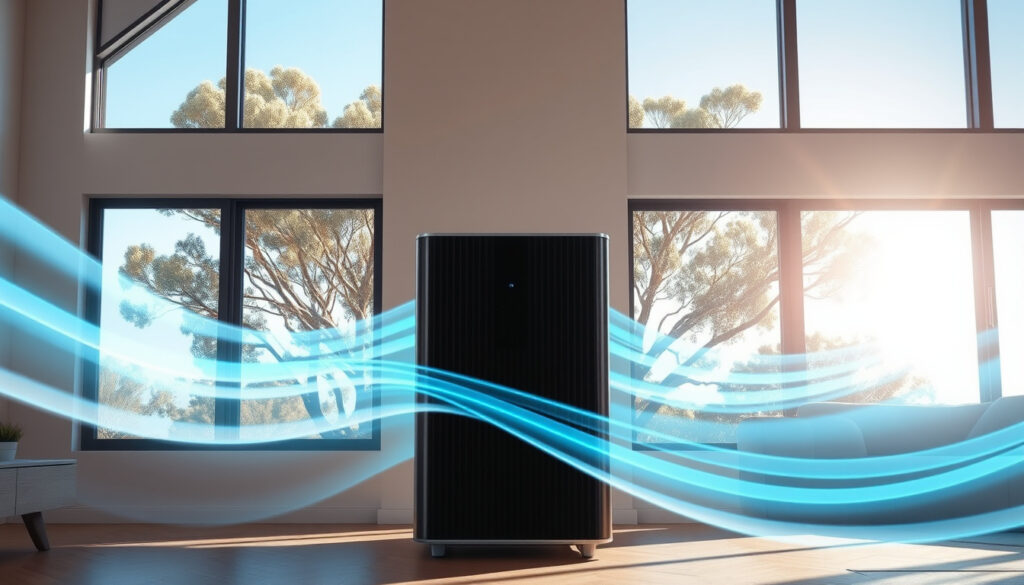
Air Purifier Australia: Worth It? Signs & Top Picks
If you’ve ever closed the windows during a bushfire season and wondered whether the air inside is truly safe, you’re not alone — with 1 in 9 Australians living with asthma and bushfire smoke events that can blanket entire cities, the air purifier market has seen a surge that shows no sign of slowing. This guide cuts through the marketing noise to help you decide if an air purifier is worth the investment, which features actually matter for Australian conditions, and how to choose the right one for your home.
Australians with asthma: 1 in 9 (AIHW) ·
Indoor air vs outdoor pollution: 2–5 times higher (U.S. EPA) ·
HEPA particle removal efficiency: 99.97% at 0.3 microns ·
2019–20 bushfire smoke impact: Worst air quality on record in parts of Australia
Quick snapshot
- HEPA filters capture 99.97% of particles ≥0.3 microns (Asthma Australia)
- Air purifiers reduce indoor particulate matter and allergens (CHOICE)
- Long-term health benefits of continuous use are not fully established
- Whether purifiers prevent viral infections without additional ventilation
- Bushfire season peaks November–February; air purifier demand spikes after smoke events (Review Tube)
- Smart features and energy efficiency are becoming standard in 2026 models (Review Tube)
Here’s a quick reference for the key specs to consider when shopping.
| Factor | Value | Source |
|---|---|---|
| Average price range | $100 – $1,500 AUD | Asthma Australia |
| Filter replacement frequency | Every 6–12 months | Asthma Australia |
| Typical energy use (24/7) | 30–100 watts (≈$10–$30/year) | Review Tube |
| Room size capacity | Up to 60 m² for most home models | Asthma Australia |
| Noise level (low speed) | 20–35 dB | Manufacturer specs |
| Warranty | 1–5 years depending on brand | Industry average |
Is an air purifier worth it in Australia?
How poor is air quality in Australian homes?
The U.S. Environmental Protection Agency (EPA) estimates that indoor air can be 2 to 5 times more polluted than outdoor air. In Australia, that gap widens during bushfire seasons when smoke particles infiltrate homes. According to CHOICE (independent consumer advocacy group), a good air purifier with a HEPA filter can clear bushfire smoke and smoky smells from a single room — provided doors and windows are closed.
A cheap purifier might save you $100 upfront but cost $300 extra in filters over two years. Quality units from brands like Philips or Blueair reportedly deliver consistent performance, but you pay for it — both at purchase and in replacement filters.
Do air purifiers help with asthma and allergies?
Asthma Australia (the national consumer body) states that HEPA filters remove at least 99.95% of allergens and pollutants and can remove more than 99% of fine particles such as PM2.5. They recommend air purifiers equipped with a true HEPA filter for people with asthma. CHOICE agrees: a HEPA filter is the best option for filtering smoke and allergens.
What are the upfront and ongoing costs?
Prices range from $100 for small basic units to $1,500 or more for models that purify large spaces, according to Asthma Australia. The real hit comes from filters: replacement every 6–12 months can add $100–$300 annually. Energy costs are modest — $10–$30 per year for a unit running 24/7, as noted by Review Tube (Australian tech review site).
The implication: if you live in a bushfire-prone region or have asthma, a HEPA purifier is a worthwhile investment. For mild allergy sufferers in a modern, well-sealed home, the cost may outweigh the benefit.
What are signs you need an air purifier in your Australian home?
Do you experience unexplained allergy symptoms indoors?
- Persistent coughing, sneezing, or itchy eyes at home — especially when windows are closed — may signal poor indoor air quality.
- High levels of dust mites, pet dander, or mould spores are common triggers in Australian homes, particularly in humid coastal regions.
Asthma Australia warns that air purifiers are only useful in isolated rooms and are not a safeguard covering the whole house.
Is there visible dust buildup or musty odours?
If you’re dusting surfaces daily or noticing a musty smell in cupboards, you likely have high indoor particulate levels. An air purifier with a HEPA filter can capture fine dust, while an activated carbon filter helps with odours, according to Asthma Australia.
Do you live in a bushfire-prone or high-pollution area?
The Australian Department of Health recommends air purifiers during bushfire smoke events to reduce particulate matter. CHOICE adds that you must close all doors and windows to prevent more smoke from entering the room you want to purify.
An air purifier can’t clean your whole house. If your home is open-plan, a single unit won’t cut it — you’ll need one per main living area, or invest in a whole-house solution that typically requires professional installation.
The pattern: Air purifiers are room-specific tools, not whole-home solutions. Matching the unit to your space is what determines real-world effectiveness.
What is the best air purifier to buy in Australia?
Top-rated brands: Philips, Dyson, Breville and more
According to Sleep Solutions (Australian review aggregator), Philips and Blueair reportedly rank as the top air purifier brands in Australia based on customer reviews and performance testing. CHOICE independently tests purifiers for dust, pollen, and smoke removal; their top-rated models include Philips and Dyson.
HEPA vs. carbon filter: what’s right for your needs?
The combination of HEPA plus activated carbon dominates the Australian market, according to Review Tube, because it addresses both particulate matter and gaseous pollutants. Asthma Australia explains that activated carbon filters use charcoal to clear smoke.
| Filter type | Best for | Source endorsements |
|---|---|---|
| HEPA + activated carbon | Allergies, asthma, smoke, odours, VOCs | Asthma Australia, CHOICE |
| HEPA only | Allergies, dust, pollen (no odour removal) | Asthma Australia |
| Ionizer only | Not recommended — may produce ozone | Asthma Australia advises avoidance |
Best value picks according to Choice reviews
CHOICE found that a $200 purifier can be just as effective as an $800 one for basic dust removal — surprising but true. The best model depends on room size, filter type, and specific concerns (asthma vs. smoke). Sleep Solutions adds that best picks are highly personal: “the best model depends on room size, whether HEPA filtration is needed for allergies, and noise tolerance for bedroom use.”
The pattern: don’t overspend on features you won’t use. A mid-range HEPA purifier from a reputable brand will outperform a cheap ionizer every time.
What is the best air purifier for asthma?
What features matter most for asthma sufferers?
Asthma Australia is clear: the most important factor is the type of filter — choose a unit with a true HEPA filter. They also recommend checking the Clean Air Delivery Rate (CADR) — a measure of how quickly the purifier cleans the air. A higher CADR is better for larger rooms.
HEPA filters and asthma: what the research says
Asthma Australia reports that HEPA filters remove more than 99% of PM2.5 — the tiny particles that trigger asthma attacks. Reducing indoor triggers like dust mites, pollen, and pet dander can help manage symptoms.
Recommended models from Asthma Australia and specialists
Asthma Australia does not endorse specific brands, but advises avoiding ozone-generating models (ionizers). They recommend looking for a HEPA filter and matching the purifier to your room size. CHOICE top-rated models for asthma include Philips and Dyson, both of which feature sealed HEPA systems.
An asthma sufferer breathing in PM2.5 from a nearby bushfire can experience an attack within minutes. A HEPA purifier in the bedroom can cut that risk — but only if it’s on and sized correctly.
The implication: For asthma management, filter type and room size matching are non-negotiable. A true HEPA unit with adequate CADR is the baseline, not a luxury.
Is it good to sleep with an air purifier in your bedroom?
Does running an air purifier at night affect sleep quality?
Air purifiers can reduce allergens and improve breathing while sleeping, which may lead to better rest. Sleep Solutions notes that most modern purifiers offer a sleep or night mode that lowers fan speed and noise. The quietest models reportedly operate below 25 dB, comparable to a whisper.
Noise levels and night mode features
- Standard purifiers at low speed: 20–35 dB (quiet library)
- Sleep mode: typically under 25 dB, often with dimmed lights
- Review Tube suggests ENERGY STAR-certified models with DC motors and smart sensors for energy efficiency during overnight use.
Potential benefits for allergy and asthma sufferers
For those with night-time allergies, a HEPA purifier can reduce dust mite allergens and pet dander that accumulate in bedding. Asthma Australia confirms that reducing these triggers is a key step in managing asthma symptoms.
The trade-off: you’re adding a power-consuming device in your bedroom. But at $10–$30 per year in electricity, the cost is minimal compared to the potential improvement in sleep quality.
Are there any downsides or risks to using an air purifier?
Can air purifiers produce ozone?
Some older ionizing purifiers generate ozone — a lung irritant. Asthma Australia explicitly advises people with asthma to avoid ozone-producing models. Look for units certified as ozone-free or CARB-certified.
Do they increase electricity bills significantly?
Typical energy use is 30–100 watts, costing around $10–$30 per year if run 24/7 (based on Australian electricity rates). That’s less than a fridge. Review Tube recommends looking for ENERGY STAR-rated models to keep costs low.
What about filter replacement costs and maintenance?
Filter replacement every 6–12 months adds $100–$300 annually, depending on the model. Asthma Australia warns that replacement filters must be factored into the total cost — a cheap unit may have expensive proprietary filters that eat into your savings.
Upsides
- Reduces indoor allergens and asthma triggers
- Effective against bushfire smoke particles
- Low energy consumption (≈$10–$30/year)
- Quiet operation on sleep mode
Downsides
- Ozone risk from ionizers
- Ongoing filter costs ($100–$300/year)
- Only effective in a single room
- No proven viral protection without ventilation
The pattern: The downsides are manageable — avoid ionizers, budget for filters, and match room size — but ignoring any one of them can turn a helpful device into a costly mistake.
What’s clear and what’s not
Confirmed facts
- HEPA filters capture 99.97% of particles ≥0.3 microns (Asthma Australia)
- Air purifiers reduce indoor particulate matter, asthma triggers, and allergens (CHOICE)
- Ozone-generating purifiers can worsen respiratory conditions (Asthma Australia)
What’s unclear
- Long-term health benefits of continuous air purifier use are not fully established
- Whether air purifiers prevent viral infections (e.g., COVID-19) without ventilation
- Optimal filter replacement schedule varies by environment and use
The catch: Confirmed benefits are real but context-dependent — room size, filter type, and runtime all determine whether a purifier actually delivers on its promise.
Expert perspectives
“Our tests show that a $200 purifier can be just as effective as an $800 one for basic dust removal.”
CHOICE senior testing expert
“We recommend people with asthma choose a HEPA-filtered air purifier and avoid those that produce ozone.”
Asthma Australia spokesperson
“Indoor air can be 2 to 5 times more polluted than outdoor air, making air purifiers a valuable tool.”
The implication: Across testing bodies, health authorities, and environmental agencies, the consensus is consistent — HEPA filtration works, but only when matched to the specific need and space.
Summary
Air purifiers are not a cure-all, but for Australian conditions — bushfire smoke, high asthma rates, humid coastal climates — a well-chosen HEPA model can make a real difference. The upfront cost is just the beginning: filter replacements and room size matching are where most buyers go wrong. For Australian households, the decision is clear: invest in a true HEPA purifier sized for your space, or risk breathing in particulates that your lungs can’t filter out on their own.
Also see our guide on Foot Massage Machine: Do They Work? Safety & Best Picks and Home Security Cameras: Wired vs Wireless & Legal Guide for more home wellness and device buying advice from an Australian perspective.
For a deeper look at the best models, check out our guide to top-rated air purifiers in Australia tested by CHOICE.
Frequently asked questions
How often should I change the air purifier filter?
Most manufacturers recommend every 6–12 months, depending on usage and air quality. Asthma Australia advises factoring in replacement costs before buying.
Can air purifiers remove smoke from bushfires?
Yes. CHOICE says a HEPA-filtered purifier can clear smoke and smoky smells from a single room, provided doors and windows are closed.
Do I need an air purifier if I have central air conditioning?
Central AC systems typically only recirculate air and may not filter fine particles. A standalone HEPA purifier is more effective for removing smoke, dust, and allergens.
Should I run my air purifier 24/7?
Running continuously is common and safe. Energy use is low — around $10–$30 per year. Many modern purifiers have auto modes that adjust fan speed based on air quality, as noted by Review Tube.
What is CADR and why does it matter?
CADR stands for Clean Air Delivery Rate — it measures how fast the purifier removes particles from the air. Higher CADR means faster cleaning for a given room size. Asthma Australia says room size is critical when choosing a purifier.
Can air purifiers help with pet dander?
Yes. A HEPA filter captures pet dander and other allergens. Asthma Australia recommends HEPA filters for reducing indoor triggers.
Do air purifiers remove viruses like COVID-19?
According to the EPA, air purifiers with HEPA filters can capture virus-sized particles, but they should be used alongside ventilation and other precautions. The long-term evidence is still unclear.
Are there any air purifiers that don’t need filters?
Yes — ionizers and electrostatic precipitators don’t use replaceable filters, but Asthma Australia advises against them because they can produce ozone. Stick with HEPA-based units for safety.
More related posts
 Jimmy Kimmel Suspension and Son’s Heart Condition: What Happened
 Tamika Upton: Biography, Salary, Partner, Why She Left Newcastle
 Alfred Molina: Biography, Ethnicity, and Famous Roles
 Antony Starr: Biography, Net Worth, Accent, and Controversies
 LG Fridge: Common Problems, Lifespan & Samsung Comparison
 Babe Ruth: Biography, Stats, Death, Net Worth, and Legacy
 Mark Carney: Biography, Citizenship, and Family
 Talulah Riley: Age, Net Worth, Marriages, and Career