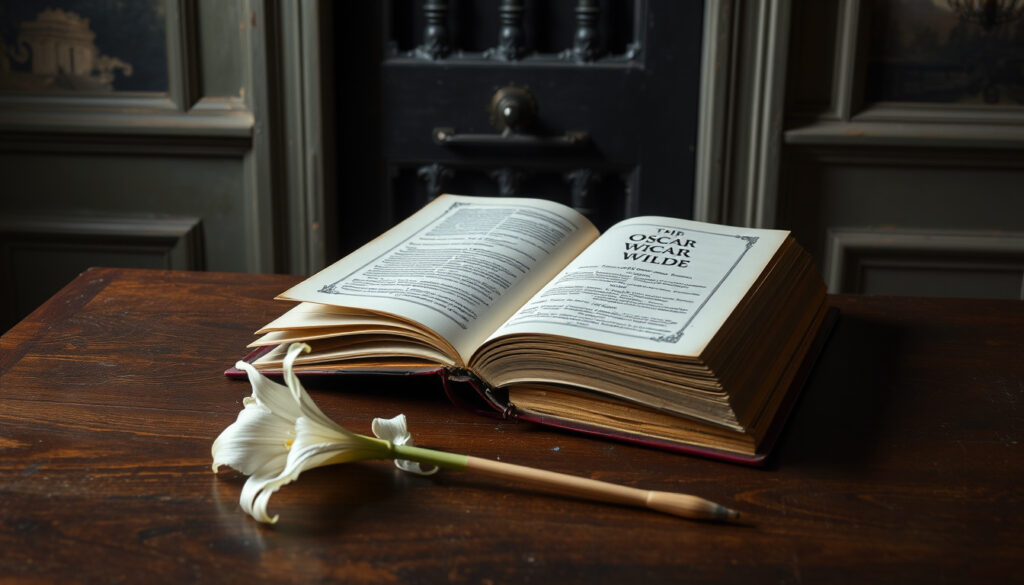
Oscar Wilde: Biography, Works, Downfall, and Quotes
Few figures in literary history have left as tangled and brilliant a legacy as Oscar Wilde. Born in Dublin in 1854 Wikipedia, he rose to become London’s most celebrated playwright and wit before a catastrophic libel trial sent him to prison. This article traces his path from celebrity to convict, examines his most famous works and quotes, and explores why he remains a symbol of artistic freedom and LGBTQ identity.
Born: 16 October 1854, Dublin, Ireland ·
Died: 30 November 1900, Paris, France (cerebral meningitis) ·
Nationality: Irish ·
Notable Works: The Picture of Dorian Gray, The Importance of Being Earnest, Lady Windermere’s Fan ·
Imprisonment: 1895–1897 for gross indecency ·
Famous Quote: “We are all in the gutter, but some of us are looking at the stars.”
Quick snapshot
- Published ‘The Picture of Dorian Gray’ (1890) (Encyclopaedia Britannica)
- Wrote acclaimed plays like ‘Lady Windermere’s Fan’ and ‘The Importance of Being Earnest’ (Encyclopaedia Britannica)
- Known for his epigrams and aesthetic philosophy (Poetry Foundation)
- Libel case against Marquess of Queensberry (Magdalen’s Wilde (University of Oxford))
- Convicted of gross indecency (UCLA English Department)
- Imprisoned from 1895 to 1897 (Famous Trials)
- Moved to France after release (British Library)
- Died in Paris in 1900 from cerebral meningitis (Wikipedia)
- Buried in Père Lachaise Cemetery (British Library)
Six key biographical markers, one pattern: Wilde’s life moved rapidly from intellectual promise to literary triumph, then to legal disaster and early death.
| Label | Value |
|---|---|
| Full Name | Oscar Fingal O’Flahertie Wills Wilde (Wikipedia) |
| Born | 16 October 1854, Dublin, Ireland (Encyclopaedia Britannica) |
| Died | 30 November 1900, Paris, France (Poetry Foundation) |
| Occupation | Playwright, novelist, poet, essayist (Encyclopaedia Britannica) |
| Literary Movement | Aestheticism, Decadent movement (Poetry Foundation) |
| Notable Works | The Picture of Dorian Gray, The Importance of Being Earnest, The Ballad of Reading Gaol (EBSCO Research Starters) |
What is Oscar Wilde most famous for?
Wilde’s fame rests on two pillars: his biting wit and a small but influential body of work. He is best known for his Gothic novel The Picture of Dorian Gray (1890) Wikipedia and his comic plays, especially The Importance of Being Earnest (1895) Encyclopaedia Britannica. His aphorisms—”I can resist everything except temptation”—are quoted as often as his lines from the stage.
What is his most famous novel?
- The Picture of Dorian Gray, published in 1890, is his only novel and a cornerstone of the aesthetic and decadent movements Encyclopaedia Britannica.
- The story of a man who trades his soul for eternal youth scandalised Victorian readers and sparked accusations of immorality Poetry Foundation.
What are his most famous plays?
- Lady Windermere’s Fan (1892) established Wilde as a major playwright Encyclopaedia Britannica.
- The Importance of Being Earnest (1895) is widely considered his masterpiece, a farce of mistaken identities and social satire EBSCO Research Starters.
How did he become known for his wit and epigrams?
From his Oxford days onward, Wilde cultivated a public persona built on paradox and clever inversion. His plays are packed with quotable lines, and he published columns of epigrams in magazines EBSCO Research Starters. His preface to Dorian Gray declares: “All art is quite useless.”
Wilde’s fame today rests less on a single work than on the persona he built: the aesthetic dandy who turned every sentence into a verbal gem. The consequence: his lines survive independently of their plays.
The implication: Wilde’s wit became his brand, outlasting the Victorian society that tried to bury him.
What was the downfall of Oscar Wilde?
Wilde’s collapse was swift and public. He instigated a libel suit against the Marquess of Queensberry, father of his lover Lord Alfred Douglas, and the case backfired catastrophically Magdalen’s Wilde (University of Oxford). Within days, Wilde was arrested for gross indecency The London Archives.
What led to his imprisonment?
- Wilde in 1894 began a relationship with Lord Alfred Douglas, known as “Bosie”, a young poet Encyclopaedia Britannica.
- Queensberry left a card at Wilde’s club reading “for Oscar Wilde posing Somdomite” (spelling error intended) Famous Trials.
- Wilde sued for libel on 1895-03-02; the case opened 1895-04-03 The London Archives.
- The defence hired private detectives and found evidence of Wilde’s same-sex relationships UCLA English Department.
- Three days into the trial, Wilde withdrew his libel suit Encyclopaedia Britannica.
What was the trial of Oscar Wilde about?
After the libel case collapsed, a warrant for Wilde’s arrest was issued. He was tried for “gross indecency” under the Criminal Law Amendment Act 1885 Famous Trials. The first trial ended with a hung jury; a retrial in May 1895 convicted him. Wilde was sentenced to two years of hard labour UCLA English Department.
How did his relationship with Lord Alfred Douglas contribute?
Douglas encouraged Wilde to sue his father, despite advice from friends to drop the matter Encyclopaedia Britannica. After Wilde’s release, he reunited with Douglas in Naples, but their relationship ended amid financial disputes British Library.
Wilde’s downfall was largely self-inflicted: he chose to sue a powerful aristocrat over an insult, not realising the legal system would turn on him. The consequence: his courage became his undoing.
The pattern: Wilde’s legal gamble bought him two years of hard labour, not vindication.
What did Oscar Wilde say about homosexuality?
Wilde’s most famous statement on same-sex love came during his first criminal trial. When asked to explain “the love that dare not speak its name”, he delivered a speech that has become a cornerstone of LGBTQ literature Famous Trials.
What is ‘the love that dare not speak its name’?
- The phrase originated in a poem by Lord Alfred Douglas, published in 1894 Wikipedia.
- Wilde adopted it during his trial to describe homosexual love as “such a great affection of an elder for a younger man” Famous Trials.
How did Wilde defend same-sex love in court?
He argued that the love was “noble” and “pure”, and that society misunderstood it The London Archives. His speech was eloquent but failed to sway the jury; it became a rallying cry for later generations.
How is Wilde regarded as a gay icon?
Wilde’s persecution made him a martyr for queer identity. His works, particularly The Picture of Dorian Gray, are read as coded explorations of homosexual desire Poetry Foundation. Today, his grave in Père Lachaise is a pilgrimage site for LGBTQ visitors.
Wilde’s trial speech transformed a euphemism into a declaration of identity. For modern queer readers, his words provided a vocabulary of defiance long before legal equality existed.
The catch: eloquence did not save him, but it gave later generations a script for resistance.
What is Oscar Wilde’s most famous quote?
Attributing a single “most famous” quote to Wilde is tricky because he is among the most quoted writers in English. However, one line consistently tops lists: “We are all in the gutter, but some of us are looking at the stars.” from Lady Windermere’s Fan (1892) Wikipedia.
What are other notable quotes?
- “I can resist everything except temptation.” – Lady Windermere’s Fan
- “Be yourself; everyone else is already taken.” – widely attributed, though exact source is debated
- “Experience is simply the name we give our mistakes.” – from The Picture of Dorian Gray Encyclopaedia Britannica
How did Wilde’s quotes reflect his philosophy?
His epigrams invert expected moralising, preferring wit to sincerity. They embody the aesthetic creed that style matters more than substance, yet they often contain sharp social critique.
Which quote is most often attributed to Wilde?
The “be yourself” quote is ubiquitous on social media, though scholars note it does not appear in his published works with that wording. Its popularity shows how Wilde’s voice has been appropriated into modern self-help culture.
The pattern: Wilde’s quotes outlived their author because they invert Victorian pieties with surgical precision.
Was Oscar Wilde Irish or British?
Wilde was Irish by birth and identity, though he spent most of his adult life in England. He was born in Dublin to Irish parents and always considered himself Irish, a position he held proudly despite his success in London Wikipedia.
Where was Oscar Wilde born?
- 21 Westland Row, Dublin, on 16 October 1854 Wikipedia.
- His mother, Jane Francesca Elgee, was a poet and Irish nationalist.
How did he self-identify?
Wilde called himself an Irishman and wrote about Irish mythology. In letters, he criticised English colonialism and identified with the oppressed British Library.
Why is he often considered Irish despite living in England?
His accent, wit, and cultural references mark him as Irish. The British establishment saw him as an outsider, which may have contributed to his harsh treatment during the trials.
The implication: Wilde’s Irishness gave him critical distance from the society that later destroyed him.
Why did Oscar Wilde’s wife leave him?
Constance Wilde, born Constance Lloyd, married Wilde in 1884. They had two sons. After Wilde’s arrest and conviction, she fled with the children to Switzerland and changed their surname to Holland to escape the scandal Encyclopaedia Britannica.
Who was Constance Wilde?
- She was a children’s book author and supporter of Wilde’s work.
- She remained loyal through the early stages of the trials but could not face the public shame of his imprisonment.
What prompted her to leave?
The conviction for gross indecency made her socially and legally vulnerable. She feared for her sons’ futures and sought to distance them from the scandal British Library.
Did she ever return to Wilde?
She died in 1898 at age 40 from a spinal operation, three years before Wilde’s release. They never reconciled. Wilde was reportedly devastated by her death.
Constance’s departure was less about anger than survival: as a Victorian woman, staying with a convicted homosexual would have destroyed her family’s social standing. The consequence: Wilde lost his family and his children’s names.
The pattern: Wilde’s ruin cascaded beyond his own life to his wife and sons, who paid the price of his conviction.
Timeline of Oscar Wilde’s life
The trajectory from Dublin to disgrace: key events that defined a century’s most scandalous literary career.
| Date or Period | Event |
|---|---|
| 1854 | Born in Dublin, Ireland (Wikipedia) |
| 1874–1878 | Attends Magdalen College, Oxford, wins Newdigate Prize (Encyclopaedia Britannica) |
| 1884 | Marries Constance Lloyd (Encyclopaedia Britannica) |
| 1890 | Publishes The Picture of Dorian Gray (Poetry Foundation) |
| 14 Feb 1895 | The Importance of Being Earnest opens in London (The London Archives) |
| 2 Mar 1895 | Wilde receives libel charge against Queensberry (Magdalen’s Wilde (University of Oxford)) |
| 3 Apr 1895 | First trial begins at Old Bailey (The London Archives) |
| 25 May 1895 | Convicted of gross indecency, sentenced to two years hard labour (UCLA English Department) |
| 1895–1897 | Imprisoned at Pentonville, Wandsworth, and Reading Gaol (Magdalen’s Wilde (University of Oxford)) |
| 1897 | Released, moves to France under name Sebastian Melmoth (British Library) |
| 1898 | Publishes The Ballad of Reading Gaol; Constance dies (Wikipedia) |
| 30 Nov 1900 | Dies in Paris of cerebral meningitis (Poetry Foundation) |
Clarity check
- Wilde was convicted of gross indecency in 1895 (UCLA English Department)
- He wrote The Picture of Dorian Gray and The Importance of Being Earnest (Encyclopaedia Britannica)
- His wife Constance left him after imprisonment (British Library)
- He died of cerebral meningitis in Paris (Wikipedia)
- Exact details of Wilde’s final meetings with Lord Alfred Douglas remain disputed among biographers
- The precise intended meaning of “the love that dare not speak its name” is still debated: was it a defense of platonic affection or a coded admission?
- Biographers disagree on whether Wilde’s prison writing was censored or voluntarily restrained
- The exact circumstances of his conversion to Catholicism on his deathbed are not fully documented
Quotes from and about Oscar Wilde
“The love that dare not speak its name in this century is such a great affection of an elder for a younger man… it is beautiful, it is fine, it is the noblest form of affection.”
– Oscar Wilde, during his trial at the Old Bailey, 30 April 1895 (Famous Trials)
“We are all in the gutter, but some of us are looking at the stars.”
– Oscar Wilde, Lady Windermere’s Fan, Act III (1892) (Wikipedia)
“I am the love that dare not speak its name.”
– Lord Alfred Douglas, from the poem Two Loves (1894) (Wikipedia)
Three voices, one legacy: Wilde’s own speech, his stage lines, and his lover’s poem together formed the vocabulary of queer identity in the late nineteenth century.
For LGBTQ historians and free speech advocates, the legacy of Oscar Wilde is both a triumph and a warning: his wit lives on in every schoolroom, but the cost of his honesty—two years of hard labour, exile, and early death—remains a reminder of what society still risks when it punishes private love. The trade-off for queerness in the Victorian era was public destruction; the modern lesson is that legal reform was necessary, and incomplete.
Related reading: Oscar Wilde’s downfall and trials · The three trials of Oscar Wilde
For a deeper look into the events that led to his exile, readers can explore Oscar Wildes tragic downfall and its lasting impact on his legacy.
Frequently asked questions
Where was Oscar Wilde born?
Wilde was born at 21 Westland Row, Dublin, Ireland, on 16 October 1854 (Wikipedia).
What was Oscar Wilde’s education?
He attended Portora Royal School in Enniskillen, then Trinity College Dublin, and later Magdalen College, Oxford, where he won the Newdigate Prize for poetry (Encyclopaedia Britannica).
What is The Picture of Dorian Gray about?
The novel follows a handsome young man who remains youthful while his portrait ages and shows the moral decay of his sins. It explores aestheticism, vanity, and the consequences of hedonism (Encyclopaedia Britannica).
How did Oscar Wilde die?
He died of cerebral meningitis on 30 November 1900 in a small hotel in Paris, at age 46 (Poetry Foundation).
What plays did Oscar Wilde write?
Besides The Importance of Being Earnest, his major plays include Lady Windermere’s Fan, A Woman of No Importance, An Ideal Husband, and Salomé (Encyclopaedia Britannica).
Who was Lord Alfred Douglas?
Known as Bosie, Douglas was Wilde’s lover, a poet and aristocrat. His father, the Marquess of Queensberry, instigated the libel case that led to Wilde’s imprisonment (British Library).
What is aestheticism?
Aestheticism was a 19th-century movement that valued beauty over moral or social function, encapsulated by Wilde’s phrase “art for art’s sake.” (Poetry Foundation)
What is The Ballad of Reading Gaol about?
Written after Wilde’s release, it reflects on prison life and the execution of a fellow inmate. It criticises the cruelty of the penal system (Encyclopaedia Britannica).
More related posts
 Sidhu Moose Wala: 2022 Death Mystery, Songs & Legacy
 Ciryl Gane: Record, Next Fight, Net Worth, and Ethnicity (2025)
 Brendan Abbott: The Postcard Bandit’s Story and Where He Is Now
 Home Security Cameras: Wired vs Wireless & Legal Guide
 David Harbour Allegations and Mental Health: What You Need
 Ironing Board Cover – Best 2025 Picks for Smooth Ironing
 Carrie Preston: Children, Face Scar, and Career Facts
 Alyson Hannigan: Career, Friendships, and Life Now